
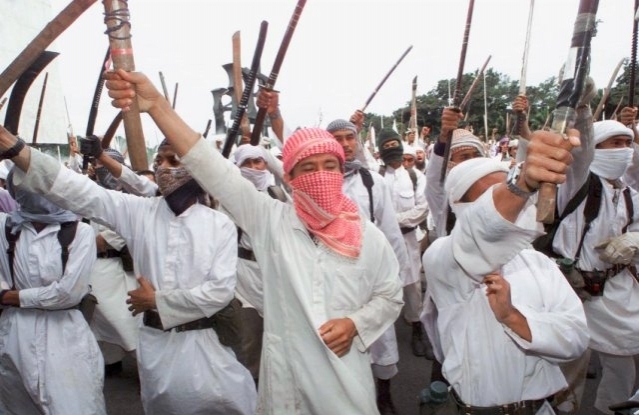
With this comparison in mind, Pelletier’s findings suggest that the competition for influence among local religious authorities in East Java is not as intense or open as it is in West Java. In West Java, the fragmented nature of local religious authority has led to fierce competition, with religious leaders employing more aggressive rhetoric to gain influence. This environment has fostered the growth of religious radicalism.
In simpler terms, religious radicalism has been used as a tool to bolster the status, influence, and power of competing local religious authorities. Pelletier concludes that the proliferation of small religious leaders, or kiai, explains the rapid growth of militant groups in West Java.

How might this phenomenon reshape Indonesia’s religious landscape? There is a potential paradox at play. One of the side effects of democracy is the erosion of the influence of traditional religious figures and institutions. As these figures lose their concentration of power, “particular forces” vie for influence. When this happens, there is a greater opportunity for the rise of religious radicalism, especially driven by transnational ideological movements.
In light of this, Pelletier offers a key recommendation: authorities, especially the government, must carefully manage this phenomenon. The competition for influence among local religious authorities needs to be limited to control the mobilization of religious radicalism, which could otherwise pose a serious threat to the future of democracy in Indonesia.