

Kiai Abdulhalim was born in Majalengka, West Java. There is no record of the date and year of his birth. He is the son of Muhammad Iskandar and Siti Mutmainah, a family descended from a Banten cleric who moved to Majalengka to fulfill his duties as Penghulu Kawedanan Jatiwangi. This Kiai, whose small name is Ahmad Syatori, has not enjoyed his father’s affection for so long. The father had to return to Rahmatullah precisely when he was still a child; therefore, practically, he lived only under the care of his mother.
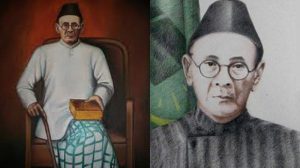 Jatiwangi’s social life, which at that time was already ethnically and religiously plural, led Syatori to form close friendships with Chinese children so that he could speak Chinese every day. He is also friends with adherents of non-Islamic religions such as Christianity, Hinduism, Buddhism, and Muslim children themselves. He also had close contact with and learned to read Latin and Dutch from van Houven, a Protestant zending who lived in Cideres (central Protestantism in Majalengka). From his close association with his diverse friends, Syatori gained knowledge and experience, which he later inducted as a pluralistic and multicultural group of thought and awareness.

Similar to the experience of Kiai Ikhsan Jampes (Kediri), for example, who loves wayang kulit; Since his youth, Syatori was very fond of watching shadow puppet shows, which were popular at that time and were often held in Jatiwangi and its surroundings. Some of the puppet characters that performed, said several elders in Majalengka, were deeply embedded in Syatori’s mind, such as Semar as a representative of the defenders of the ordinary people and the oppressed wong cilik, the genius Krisno, and the assertive Merkudara. These figures are always illustrated in and adorn his lectures, da’wah, and open conversations later on when he became a Kiai and changed his name to Abdul Halim. As a wayang kulit fan, Syatori also seems to enjoy gambling, which usually accompanies wayang performances; he is known to be very master of sitir and domino gambling and always wins in every gambling he participates in. However, for some reason, he left the habit of small-time gambling, for good, when he was a teenager.
From an early age (around 11 years old), Syatori began to learn the Koran by moving from one pesantren to another. There are five Islamic boarding schools that he explored for approximately 10 years to gain knowledge, namely Kiai Anwar’s boarding school in Ranji Wetan Village and Kiai Abdullah Sindangjaya’s pesantren (both in Majalengka), Kiai Sudja’ Bobos boarding school in Cirebon, Kiai Ahmad Sobari’s boarding school in Ciwedus Kuningan, and Kiai Agus boarding school in Kenayangan Pakalongan. But, unfortunately, there is no record of his knowledge and books in the five Islamic boarding schools scattered across the four regencies.
Not satisfied with the results of the study, two years after being married to Siti Murbiah, daughter of Kiai Muhammad Iyas, a Hoofd Penghulu Landraad (now Head of the Ministry of Religion) Majalengka, Syatori at the age of 22 left the archipelago to study at the Masjidil Haram, Mecca. Like the crater of Condrodimuka, a place where the famous scholars of the Archipelago Archipelago forged their knowledge and built their intellectual spirit. The Grand Mosque, since the 17th century until the mid-20th century, has been the centre of the transformation of Islamic scholarship from Sufism which maintains the doctrines of philosophical mysticism and encourages Sufis to be passive, not interested in thinking about the world towards neo-Sufism, which combines depth and Sufism piety with obedience to Shari’a activism.