
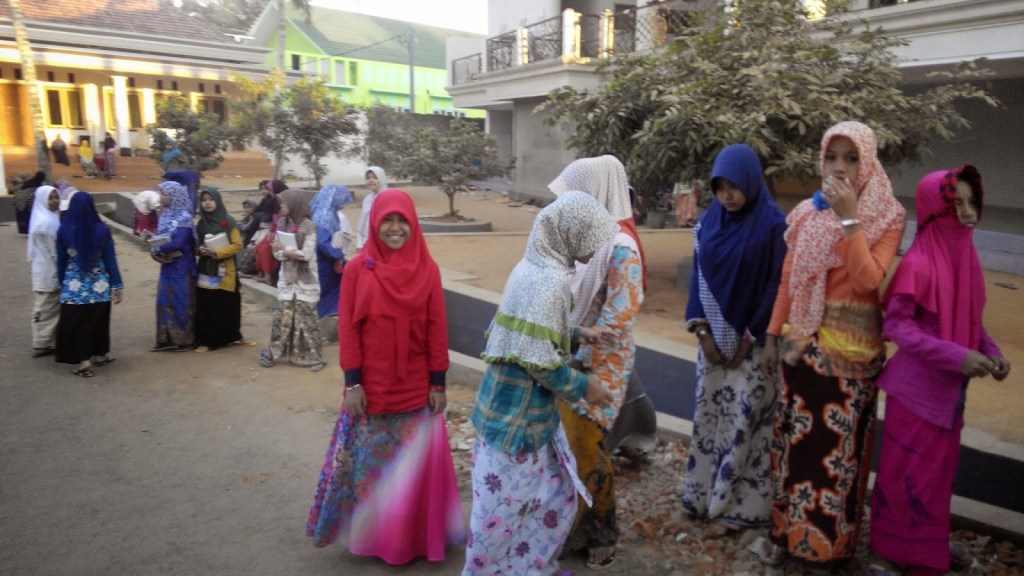
Take a look at Banyuanyar. From October to December 2020, Banyuanyar has been bustling with various activities. As the oldest pesantren in Madura, it seems to possess an unending vitality, creativity, and resilience—almost 2.5 centuries strong!
A glance at their website, banyuanyar.net, or their social media platforms, reveals just how busy this pesantren is. One of the most notable events recently held at Banyuanyar is the 2020 National Santri Festival (Pena Santri), initiated by the Barul Ulum Banyuanyar Alumni Association (Peradaban), a network of alumni spread across Indonesia.

The event featured a wide range of activities, including the National Tarbiyah Diniyah Festival, Cinematography Workshop, National Seminar, National Webinar, and the Peradaban Award. These activities, truly modern and dynamic, show that as one of Indonesia’s oldest Islamic boarding schools, Banyuanyar remains adaptive to the times.
The Origin of the Name “Banyuanyar”
The name “Banyuanyar” traces back to the school’s founder, KH Istbat Bin Ishak, who discovered a new water source while digging a well in what is now Potoan Daya Village, Palengaan District, Pamekasan Regency, Madura. Remarkably, nearly 2.5 centuries later, this water source continues to flow, undisturbed by Madura’s typically dry climate.
It was due to this discovery that the pesantren became known as Pondok Banyuanyar, meaning “new water source,” though its official name is Darul Ulum Banyuanyar.
KH Istbat began establishing Pondok Banyuanyar in 1787. On a small, arid piece of land, he built a simple prayer room or *musala*. In this humble space, KH Istbat began teaching the Qur’an and mentoring local students. Known for his patience, persistence, and simplicity, KH Istbat left behind a legacy, urging his descendants to continue developing the pesantren so it could produce students capable of meeting the challenges of their time.
This wish was faithfully upheld by his descendants. His son, KH Abdul Hamid, continued his father’s work until 1933. By then, the small prayer room had evolved into a more established pesantren. Students not only from the local area but from further afield had begun to arrive.
Under the leadership of KH Abdul Majid, KH Istbat’s grandson, Pondok Banyuanyar saw rapid growth. More facilities were built, and students from regions beyond Madura began to join. Some of these students went on to become prominent religious leaders, such as KH As’ad Samsul Arifin (leader of Syafi’iyah Salafiyah Islamic Boarding School, Asembagus, Situbondo), KH Shaleh (leader of Suger Islamic Boarding School, Jember), and KH Zaini Mun’im (leader of Nurul Jadid Islamic Boarding School, Paiton, Probolinggo).
In 1943, however, KH Majid began building another pesantren, now known as Mambaul Ulum Bata-Bata, located about 2 km south of Banyuanyar. At that time, leadership of Pondok Banyuanyar was handed to his eldest son, KH Abdul Hamid Bakir.
However, KH Abdul Hamid Bakir could not always remain at Banyuanyar, as he was actively involved in fighting against Dutch colonial forces in the Jember and Banyuwangi regions. As a result, the responsibility for leading the pesantren was passed to KH Baidawi, KH Majid’s younger brother.
A Pioneering Educational Institution
During KH Baidawi’s leadership, the pesantren made significant advancements. In 1961, Pondok Banyuanyar pioneered the establishment of Islamic schools in various regions across Madura, including Pamekasan, Sumenep, and Sampang. The school became an educational hub, providing access to Islamic education for those who could not attend the pesantren in person. Despite these changes, the pesantren maintained its traditional focus on religious education, particularly through the study of classical Islamic texts, or *kitab kuning*.
Today, Pondok Banyuanyar is under the leadership of KH Muhammad Syamsul Arifin, who has been leading the school since 1980. Under his guidance, the pesantren adopted its official name, Darul Ulum, which is now used by the various educational institutions within the Banyuanyar network.
The school continues to develop in line with its founder’s vision. Its facilities now include student dormitories, an auditorium, school buildings, public restrooms, and additional structures, including special accommodations for orphans.
Banyuanyar’s educational system has also evolved, offering both formal education and specialized programs based on students’ talents and interests. The school’s academic offerings are extensive, ranging from early childhood education to higher education, including the Darul Ulum Arabic Language College (STIBA – Sekolah Tinggi Ilmu Bahasa Arab).
As one of the oldest pesantrens, Banyuanyar has produced thousands of alumni, many of whom are spread across the country. These alumni, committed to preserving the school’s legacy, were responsible for organizing the 2020 National Santri Festival, ensuring that future generations of students remain creative and active contributors to society, in line with the vision of their founders.
Translated from here.