
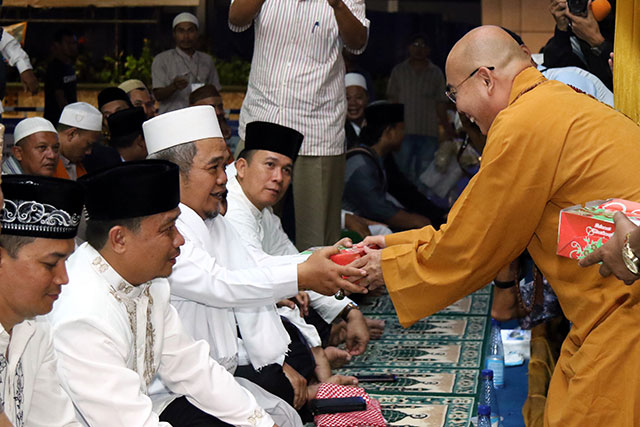
Daily life around Medina echoed this spirit. People visited one another. They exchanged gifts. They accepted invitations, shared meals, and moved through ordinary social rhythms without friction. Difference did not erase humanity.
Seen in full, the Prophet’s life invites a shift in how we read scripture itself. It nudges us toward a broader horizon—one where Islam is lived as rahmatan lil ‘alamin, a mercy to all creation. Not an abstract ideal, but a lived ethic. One that finds expression in akhlaqul karimah—noble character, embodied in everyday interactions.
At its core, the Islamic message is about building life, not tearing it down. The Qur’an speaks of responding to what gives life (Al-Anfal 8:24), of seeking goodness in this world and the next (Al-Baqarah 2:201). These are not calls to domination, but to flourishing.
So when we think about relationships between Muslims and non-Muslims today, the emphasis matters. It should rest on cooperation, respect, and a sense of shared humanity—values deeply rooted in the tradition itself. The ghazawah impulse may be part of the historical record, but it does not define the whole.
If anything, the Prophet’s life points us in another direction. One where alliances cross boundaries. Where dignity is upheld, regardless of faith. Where the goal is not victory over others, but a world in which all can live well.
And perhaps, with a deeper, more honest engagement with that legacy, the vision of Islam as a mercy for all creation can feel less like an aspiration—and more like a responsibility.