
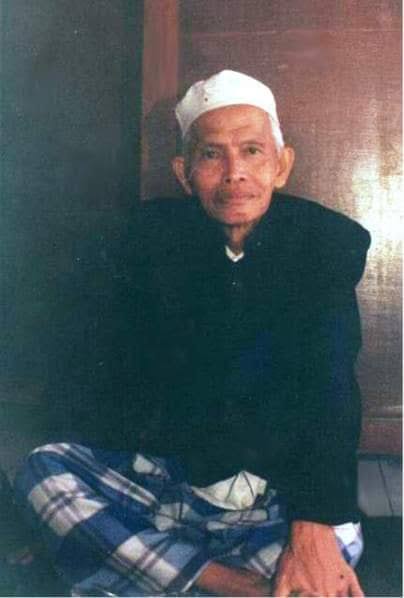
There was a reason for that choice. He noticed something others often overlooked: classical texts, for all their richness, remained out of reach for many ordinary people attending his study circles. They listened, but didn’t fully grasp. So he bridged the gap. By writing in Pegon Javanese, he opened the door wider—making the teachings accessible, intimate, and grounded in the language people lived in.
His works were never meant for the marketplace. They were printed privately within the pesantren, shared internally, almost like a trust passed from one generation to the next. First published in 1982, his writings spanned 42 sections compiled into four substantial volumes, mirroring the structure of the original text.

In matters of spirituality, Mbah Uhith followed the path of Imam al-Ghazali, while in tarekat, he aligned himself with the Naqshbandi order. His intellectual reach was wide—covering Qur’anic exegesis, hadith, Arabic grammar, and Sufism—but it was fiqh where he truly stood out. When religious leaders across Wonokromo—and even beyond Yogyakarta—faced difficult legal questions, they turned to him. Not out of habit, but out of trust.
Still, his mastery didn’t stop there. Mbah Uhith was also a scholar of hadith. In 1968, he established Majelis Bukhoren, a gathering dedicated to studying Sahih Bukhari during the month of Mawlid. He led it alongside fellow scholars—KH Busyro of Wonokromo, KH Ali Ma’sum of Tegal, and KH Muhyiddin of Jejeran. The tradition lives on to this day, long after his passing.
Two years later, he initiated another spiritual gathering: Majelis Dalail al-Khairat. Here, he served as a mujiz—a guide in the Sufi sense, known more widely as a mursyid. The gathering, held on the 12th of each Hijri month, rotated from one home to another. Locals affectionately called it malem rolasan. Even now, the rhythm continues, carried forward by his son.
For all his influence, Mbah Uhith had little interest in formal positions. Offers came—again and again. He was once asked to serve as Mukhtasyar NU Bantul, even urged to take on a leadership role. He declined, gently but firmly. At one point he was listed as part of the committee, yet remained inactive. The same went for his role in the Jejeran mosque administration.