
In this era, the line between truth and opinion grows increasingly blurred. Jean Baudrillard, in Simulacra and Simulation (1981), offers a sharp lens: we now inhabit a world where representations, images feel more real than reality itself. This is what he calls hyperreality.
When a “hijrah” influencer uploads religious content wrapped in cinematic visuals, moving background music, and aesthetically trimmed verses, audiences are inclined to accept it as absolute truth—not because of its substance, but because of its presentation. Here, the validity of religious teachings is no longer measured by theological depth, but by the number of likes and shares they generate.
Contemporary philosopher Byung-Chul Han, in The Expulsion of the Other (2016), describes this as the disappearance of “the Other.” We consume only what our algorithms feed us, an echo chamber of our own preferences.
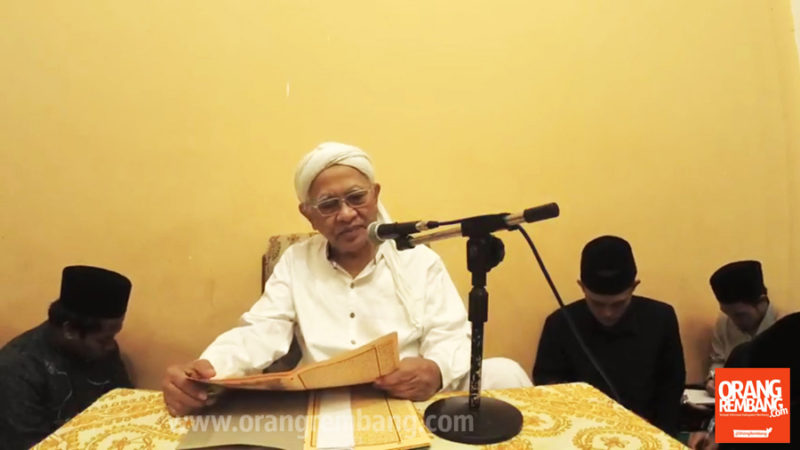
As a result, religion on our screens often becomes a tool of self-justification rather than a call to transformation. The kiai who offers difficult yet truthful counsel loses ground to the screen that delivers instant validation for our anxieties.
Authority and the Trust of Knowledge
Islam places profound emphasis on sanad as an integral part of the faith. As Abdullah ibn Mubarak famously said, quoted in the introduction to Sahih Muslim: “The chain of transmission is part of the religion. Without it, anyone could say whatever they wish.”
Normatively, the transmission of knowledge in Islam is not just about transferring information (the cognitive), but also about passing on blessing and exemplarity (the affective). In theological terms, the kiai is seen as the “heir of the prophets” (warasatul anbiya). Such inheritance demands moral integrity tested over time, not fleeting popularity.