
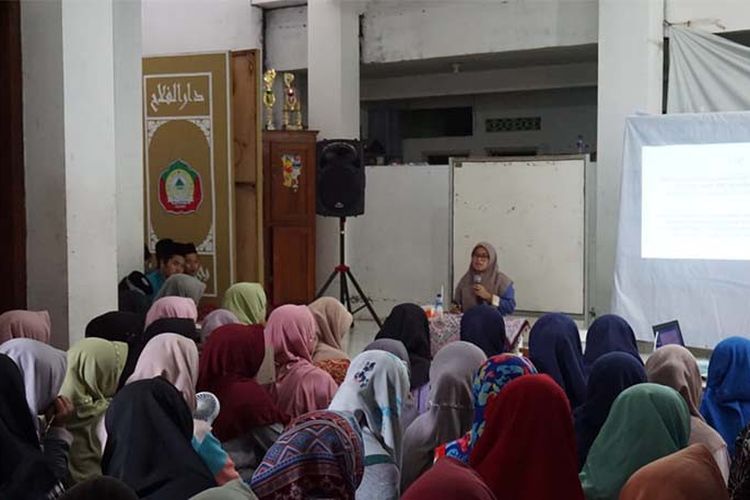
In contrast, the norm in pesantren is to provide more nuanced answers, grounded in a variety of scholarly sources and different schools of thought. The benefit is that santri (students) gain a broad understanding of differing perspectives. However, the downside is that the general public may find such answers overly complex and time-consuming.
When I once discussed with a kiai in Klaten, he explained that the reluctance to give quick answers stems from concern over the many interpretations offered by different scholars. For santri, the primary goal is to understand the philosophy behind these differences, ensuring they do not hastily condemn views that conflict with their own religious practices. In contrast, rushing to respond may lead to animosity toward other groups seen as deviant, when, in reality, there may be valid interpretations that the respondent was unaware of or failed to mention. This explains why graduates from pesantren tend to have more open and moderate views on religious differences.

The challenge is how to implement this pesantren mindset and culture in a digital space—offering engaging learning methods that still adhere to pesantren principles, using scholarly references that have clear lineages of knowledge. The digital realm must become a medium for promoting a tolerant form of Islam, helping to build a culture of unity and respect for diversity.
To date, there has been little development in the digitalization of pesantren beyond news portals, YouTube channels, and social media platforms that address ikhtilaf (differences of opinion) and national narratives. While NU Online has introduced an application containing pesantren books, there has yet to be a “digital kiai” given the mandate to manage a fully digital pesantren, complete with “digital santri.”
In line with the popular concept of santri kalong (commuter santri), the digitalization of pesantren could include rules, teaching methods, and management systems that mirror those of traditional, offline pesantren. This way, even those constrained by time and location can still become santri, even if only in a digital capacity.