
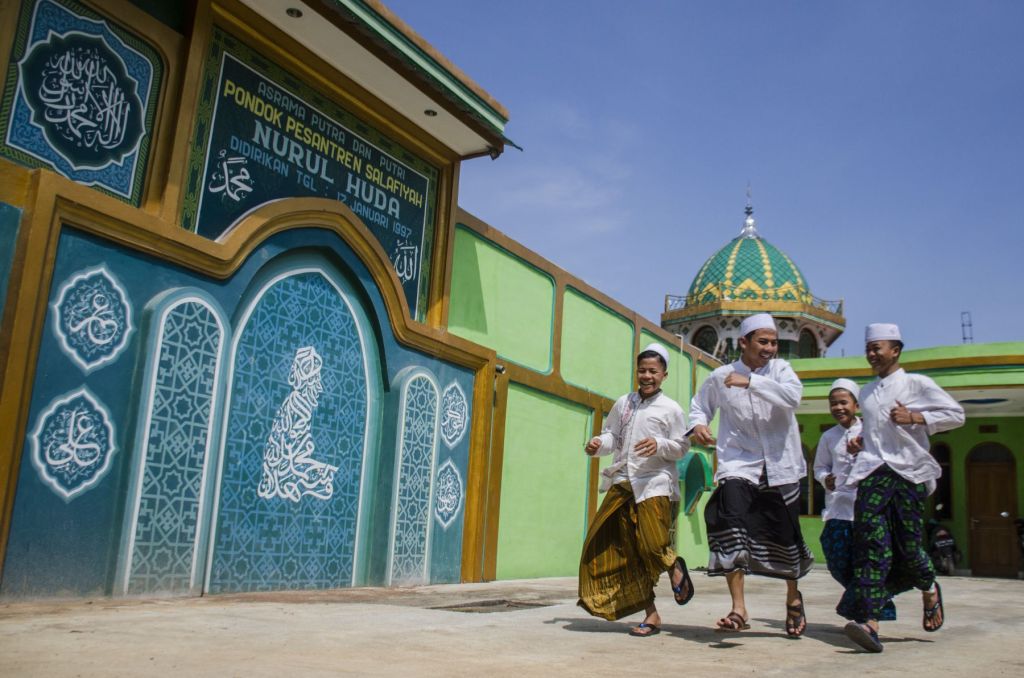
The rise of terrorism-related concerns has unsettled the pesantren (Islamic boarding school) community, as these issues have led to negative stigmas being associated with these institutions. This has sparked a debate among the public about whether pesantren are involved in terrorist activities.
Some individuals strongly oppose law enforcement’s efforts to investigate and search pesantren, viewing such actions as an insult to the sanctity of these religious institutions, which they believe should be protected. Others argue that, for the sake of justice and to prove pesantren’s non-involvement in terrorism, authorities should be allowed to conduct searches—provided that they follow proper procedures and respect pesantren’s ethical guidelines. As a result, the debate surrounding terrorism has shifted from a criminal issue to a religious one.

This raises important questions: Are pesantren truly breeding grounds for terrorism? How should pesantren respond to and address these accusations? Answering these questions is crucial to prevent stigmatization of the pesantren community. Clarifying the relationship between pesantren, Islamic movements, and terrorism will help alleviate the concerns of pesantren communities and correct public misunderstandings.
A Historical Foundation of Struggle
Pesantren are unique educational institutions, not only because they have existed for centuries, but also due to their culture, teaching methods, and the networks they maintain. Their significance in Indonesia, particularly in Java, is so notable that Clifford Geertz once described them as a subculture of Indonesian society.
During the colonial era, pesantren were a foundation for nationalist struggles. Many anti-colonial movements were rooted in pesantren communities. As religious institutions, pesantren held a clear social foundation by integrating deeply into the surrounding society.
In times when other social institutions were not yet functioning, pesantren served as centers for community activities. They provided religious education, martial arts training, medical treatment, agricultural advice, matchmaking services, and even organized resistance against colonial forces—all under the leadership of a kiai (Islamic scholar and leader).
The figure of the kiai was not only a religious leader but also a social and political leader. Given their close ties with the people, pesantren had strong roots as bases for popular struggle. In addition to their deep social connections, pesantren also shared strong networks with other pesantren, as many leaders were linked by common religious thought and kinship ties (Jamakhsari Dhofir, 1982).
Another factor that strengthened the cohesiveness of pesantren was their shared ideology. Most pesantren in Indonesia use the same teaching references and religious texts. Martin van Bruinessen’s research on 46 major pesantren in Indonesia noted that they all relied on the same foundational texts, particularly in Islamic jurisprudence (Pesantren, 1989). This consistency is due to a rigorous selection process, where only certain trusted texts, known as mu’tabar books, are allowed to be studied in pesantren.