
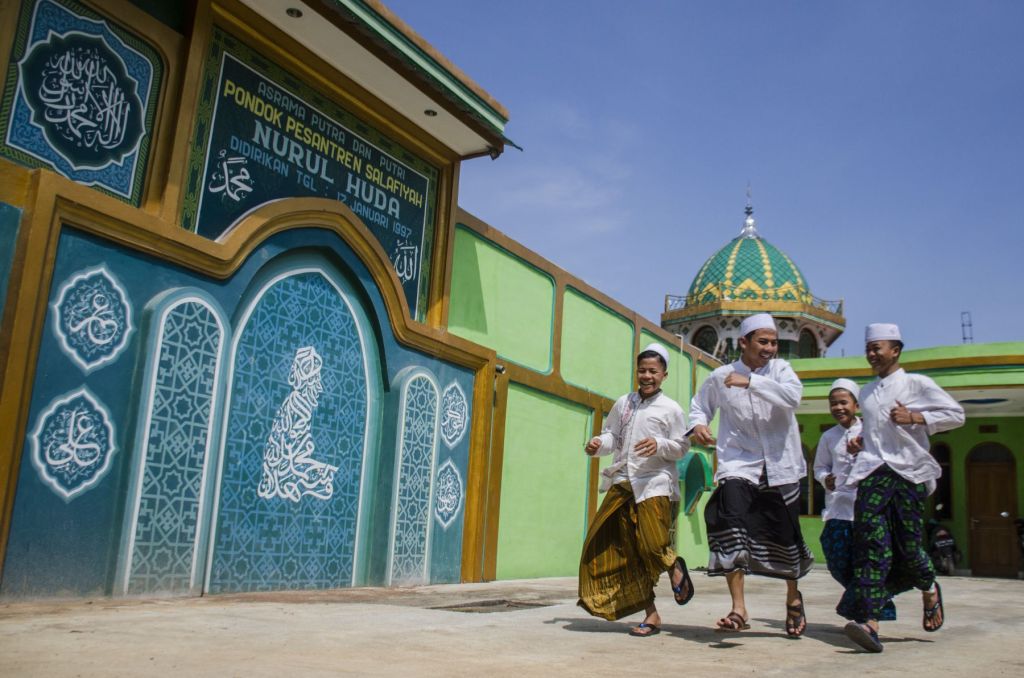
Despite their historical role in resisting colonialism, pesantren did not promote fundamentalist ideologies that justified violence. This is evident in the religious texts they study and the values they uphold. M. Tholhah Hasan observed that pesantren focused on applied sciences such as Islamic jurisprudence (fiqh), Sufism (tasawuf), and foundational Arabic grammar (nahu-saraf) (M. Thalhah Hasan, 1989). Rather than promoting radical interpretations of Islam, pesantren fostered a cultural understanding of the religion. This is one of the reasons why pesantren have been accepted by the public as tolerant and flexible institutions that understand the needs and sentiments of the community.
The tolerant and inclusive nature of pesantren’s understanding of Islam is reflected in the jurisprudential principle they follow, such as almukhafadzatu ‘ala qadiimisshalih wal akhdzu bi jadiidil ashlah (maintaining good old values while adopting better new ones). This principle demonstrates pesantren’s openness to both local and universal values. It ensures that pesantren do not easily fall into puritanical or symbolic practices.

Another guiding principle is khud ma safa wa da’ ma kadar (take what is pure and discard what is tainted). This principle teaches the community to judge based on behavior, morality, and the outcomes of actions rather than focusing on someone’s background or identity. If something is good, regardless of its source, it should be adopted, and vice versa.
Pesantren also follow the principle dar’ul mafasid muqaddamun ‘ala jalbil mashalih (preventing harm should take precedence over pursuing benefits). These are some of the principles that pesantren rely on to spread their religious teachings.
Through these teachings, pesantren have proven to be a powerful force in resisting colonialism. Their resistance was often cultural, creating a counter-culture and fostering Islamic nationalism. Violent resistance was considered a last resort, carefully weighed, as exemplified by the 10 November 1945 Resolusi Jihad (Jihad Resolution) incident.
Social Transformation
After Indonesia’s independence, pesantren faced the currents of modernization. This brought changes in format, structure, orientation, and teaching methods. However, these changes did not alter the core vision, mission, and orientation of pesantren. It can be said that the changes were only on the surface; the internal essence—religious spirit, values, traditions, and ideology—remained intact.
Generally, there are three approaches pesantren have taken in response to modernity. First, some have completely rejected it. These pesantren maintain strict authenticity, preserving their traditions and values, both in form and substance. Pesantren like Tegalrejo in Magelang, Mathaliul Falah in Kajen Pati, and Lirboyo in Kediri exemplify this approach. They do not incorporate secular subjects and continue to use traditional teaching methods like bandongan, sorogan, and wetonan. They also reject formal state interventions in their curriculum, as seen in their opposition to the Three-Ministerial Decree.
Second, some pesantren have fully embraced modernity, adopting modern educational models and references. This approach is seen in pesantren like Modern Darussalam Gontor in Ponorogo and Pesantren Pabelan in Magelang. These schools teach both religious and secular subjects, using modern curriculums rather than traditional pesantren frameworks.