
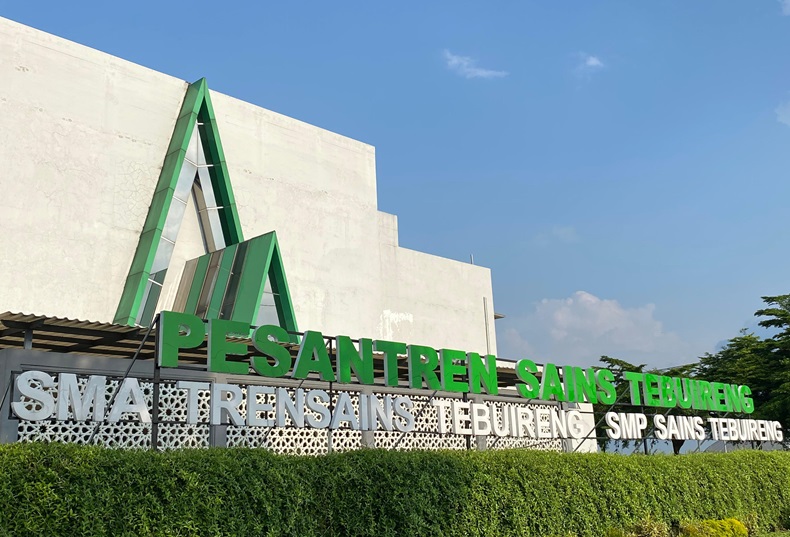
And yet pesantren were never frozen in time. They were not rigid relics. Even as they struggled to endure, they also opened themselves—carefully, selectively—to the currents of the age. Their responsiveness became, in its own way, a strategy of survival. If one traces their path from the late nineteenth century or the early twentieth century up to the present, it becomes clear that many pesantren have undergone significant transformation. Tebuireng in Jombang, for instance, had already adopted a classroom-based system by 1919, much like modern schools. By 1929, general subjects had entered its curriculum. Sidogiri in Pasuruan and Lirboyo in Kediri made similar moves in the early twentieth century. In time, many other major pesantren followed suit.
That said, the transformations unfolding across the pesantren world have been anything but uniform. Diversity, not sameness, is the rule. Every pesantren has its own temperament, its own history, its own internal logic. No two are ever exactly alike. That is why the changes taking place within pesantren come in layers, ranging from institutions that remain deeply salaf and traditional in the old sense, all the way to those that could fairly be called ultra-modern.

Official data puts the number of pesantren in Indonesia today at around 42,000. These are generally grouped into three broad categories: salafiyah (traditional), khalafiyah (modern), and those that combine the two. Even so, the real number is likely higher than the official count, and the reality on the ground is certainly more intricate than any three-part classification can capture.
Even now, there are pesantren that still resemble the old padepokan of earlier centuries. One of them lies deep in the interior of Cirebon, far from the noise of populated centers, with no proper road leading to it. To get there, people must cross a river, stepping from stone to stone. No electricity reaches the place, let alone electronic devices. Its educational system, too, remains thoroughly salafiyah—much as it would have been in earlier times. It feels almost as though the pesantren has chosen to hide itself from the clamor of modern life.
Then again, the contrast is striking when one looks at pesantren that have become modern, even hyper-modern. At Tebuireng, for example, there is now a science-focused pesantren designed to equip students with mastery in science and technology, alongside the religious learning that remains the institution’s backbone. At Amanatul Ummah in Mojokerto, international classes are offered in English. As a result, many of its graduates go on to leading universities in the United States and Europe. And more and more pesantren are developing educational models along the lines pioneered by Tebuireng and Amanatul Ummah.
Between those two opposing poles lies a wide and fascinating spectrum of other transformations. Some pesantren still preserve their salafiyah character, including the sorogan and bandongan methods of teaching classical Islamic texts, while at the same time adopting modern instruments and institutions. Some run both madrasah programs and general schools, from elementary to high school level. Some already have full-fledged general universities while also maintaining a ma’had aly with its own specialized focus. Others, alongside religious instruction, train their students in practical skills—from applied technologies to digital tools. Some operate businesses to support their own day-to-day expenses. Others build grassroots economic initiatives together with the surrounding community. Some pesantren have only dozens of students; others house hundreds, thousands, even tens of thousands. These are only fragments of a much broader and richer landscape.
Thanks to that responsiveness, and to the transformations they have been willing to undertake, pesantren have evolved in ways far more varied than many people ever imagined—far beyond the dismissive refrain, “Why won’t these pesantren just die out?” From one angle, some may still seem out of step with the times. From another, many have adjusted themselves, quite capably, to the demands and realities of the present age. Because each pesantren carries its own distinct character, its development is bound to take different paths. Visit many of them, and you will find as many differences as there are institutions you step into.
Still, one must note that there are certain things that keep a pesantren a pesantren—things that set it apart from every other kind of educational institution. It is not merely the visible elements: a kiai, students, dormitories, a place of study, a curriculum rooted in the classical texts, a mosque or prayer hall. A pesantren offers more than knowledge. It also teaches character. It plants adab—right conduct, cultivated manners, moral discipline. In fact, adab is often held to stand even above knowledge itself. That is why the relationship between teacher and student is built on deep respect and reverence, and why that ethos has become such a powerful and enduring tradition. Just as important is the abiding belief in barakah—the spiritual blessing believed to flow from the kiai or teacher. A pesantren may transform and grow in countless ways, but if it loses those things, it also loses something essential of its pesantren-ness. Those are the qualities that make it what it is. Those are the qualities that distinguish it from any other school.
Quo Vadis, Pesantren?
No institution is perfect. Pesantren are no exception. There are real challenges—bullying, safety issues, infrastructure gaps, struggles to keep pace with change.
And yet, criticism today sometimes echoes old colonial attitudes. The language may be different, but the tone feels familiar: dismissive, reductive. Calls emerge to replace pesantren with sleek “Islamic boarding schools,” polished in name but different in spirit.
Will pesantren fade away?
History suggests otherwise.
Time and again, they’ve adapted—quietly, steadily—without losing their core. They bend, but they don’t break. Their future won’t look like their past. It never has.
What lies ahead? More diversity. More reinvention. More tension between tradition and change.
But one thing seems certain: pesantren will continue to evolve on their own terms—rooted in history, yet always reaching forward.