
Debates keep resurfacing over a familiar question: does a state built on a constitution—what we now call constitutionalism—stand at odds with the Qur’an? At the far end of the spectrum, some go so far as to claim that if a state is not formally grounded in the Qur’an, it slips into the category of a kafir or even thogut state. But is that really the case? And more importantly, what kind of guidance does Islam itself offer when it comes to governing a society?
Maqasid al-Shari’ah

The Islam brought by the Prophet Muhammad (peace be upon him) speaks to life in its entirety. It doesn’t hover above human reality; it moves within it. At its core lies the concept of maqasid al-shari’ah—the higher objectives of the law. These revolve around safeguarding five essential pillars: religion, life, intellect, lineage, and property. Strip any of these away, and human existence loses its grounding.
Yet these five pillars don’t stand on their own. They need a structure, a canopy—something that holds them up and keeps them intact. That structure is the state. In other words, the realization of Shari’ah presupposes the existence of a functioning political order. A strong and stable government doesn’t merely administer rules; it preserves the very conditions that allow those principles to thrive. Without it, things unravel quickly. History offers a clear example: in the early days of Islam, when Muslims lacked sovereignty and lived under the dominance of the Quraysh in Mecca, the enforcement of these principles was severely constrained.
At that time, the Muslim community faced relentless pressure—socially, politically, even physically. Many endured persecution, some brutally so, largely because they occupied a vulnerable minority position. Power rested firmly in the hands of the Quraysh, and it showed. Eventually, a divine command set the course for a turning point: migration. The hijrah was not just a physical move; it was a shift toward autonomy.
The Birth of a Political Order
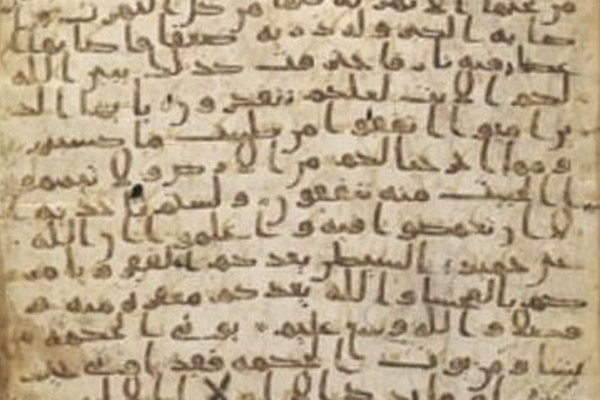
When the Muslims arrived in Yathrib—later known as Medina—the Prophet forged a pact with its inhabitants. This agreement, famously known as the Medina Charter, laid out the foundations of a new civic order. As noted by Jimly Asshiddiqie in Introduction to Constitutional Law, the charter regulated matters of defense, public order, and social cohesion. But it didn’t stop there. It also guaranteed rights, freedoms, and legal equality.
It’s no surprise, then, that scholars like Montgomery Watt and Reynold A. Nicholson have described the Medina Charter as a constitution—remarkably close, in spirit, to what we now understand as a modern one.
The Essence of Constitutionalism
At its heart, constitutionalism grows out of a social contract—a collective agreement that gives birth to a sovereign state. This agreement defines the shape of the state and grants legitimacy to its governing authority. Without it, power floats unanchored, lacking both form and justification.
Modern constitutionalism, however, goes further. It isn’t satisfied with structure alone; it demands substance. A constitution today is expected to protect human rights, not merely organize institutions. This shift emerged as a response to the dangers of rigid legal formalism—systems that prioritize procedure over justice.
History provides a stark warning. The atrocities committed by Nazi Germany during World War II were carried out under the cover of legally sanctioned policies. The law, in that case, became a tool of oppression rather than a shield against it. That’s precisely why strict legal formalism has fallen out of favor—it failed to serve justice.
Another key pillar of constitutionalism is the limitation of power. The reasoning is simple, almost intuitive: power tends to corrupt, and absolute power corrupts absolutely. Left unchecked, authority can easily tilt toward excess. A constitution, therefore, acts as a boundary—defining how far power can go and where it must stop. And crucially, only the constitution itself can impose those limits.
A state that fails to uphold these two principles—protecting human rights and restricting power—can hardly be called constitutional in any meaningful sense.
The Medina Charter and Constitutional Values
The Medina Charter, comprising 47 clauses, was an agreement between Muslims, Jews, and Christians living in the city. When you look closely, its substance reveals a set of values that feel strikingly familiar: unity, equality, and the protection of rights.
Unity is clearly articulated in Article 1. Equality and freedom of religion appear in Article 24, which affirms that Muslims and non-Muslims alike are entitled to practice their faiths without interference. These rights are not merely acknowledged—they are to be respected and protected. Articles 37, 38, and 44 go even further, declaring that defending Medina is a shared obligation, with no distinction between groups. Meanwhile, Article 14 underscores the sanctity of life—an early articulation of what we now call human rights.
Seen in this light, it’s hardly a stretch to understand why many scholars—even from outside the Islamic tradition—have recognized the Medina Charter as the earliest form of a modern constitution. Its emphasis on rights and equality mirrors the very principles that define contemporary constitutional thought.
That said, not everyone agrees on labeling it as the “first” modern constitution. Some scholars push back on that claim. Still, even they acknowledge its significance as a groundbreaking political innovation—one that helped shape the trajectory of constitutionalism as we know it today.
A Broader Perspective
The Islamic world, contrary to some assumptions, has never been intellectually behind the West. It developed its own rich traditions of thought, including in matters of governance and statecraft. Long before the ideas of equality, rights, and unity gained prominence in post–French Revolution Europe, similar concepts had already taken root in Islamic history.
So while the language of constitutionalism may sound Western—wrapped in non-Arab terminology—its essence resonates deeply with Islamic teachings. The Medina Charter stands as a testament to that alignment: a document born in a different time, yet speaking a language that still feels strikingly modern today.