
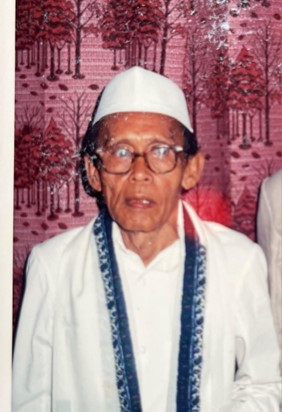
With a style that was both direct and sharply critical, KH Imam Nawawi articulated the collective anxieties of his time. Today, these verses function almost like an “alternative archive,” revealing dimensions of the 1950s–1960s that lie beyond official state narratives.
People often measure intelligence by diplomas or academic titles. KH Imam Nawawi walked a very different path. He never attended formal school, yet the breadth of his thinking left many in awe. His life stands as proof that the pesantren can be a university of life, a place where a village child can build a global horizon.

Through his work, the pesantren did more than produce devout individuals; it nurtured intellectuals, critical thinkers who questioned imperialism, colonialism, and every form of injustice. His ideas remind us that pesantren scholars are not merely guardians of tradition, but agents of social change.
Today, KH Imam Nawawi’s handwritten manuscripts still exist. Some have been studied by the Ngenger.co community, while others remain scattered among family members and former students. These writings are the traces of a village scholar who thought globally.
His legacy is not only the pesantren that still stands in Karangharjo, but also the Pegon manuscripts that record the great intellectual and ideological currents of the twentieth century. Through them, we witness how a village ulama responded to global issues, using a deeply local language.
KH Imam Nawawi Kafrawi is a living testament to how pesantren can produce intellectuals who are both grounded and worldly. From Madura to Silo, from pesantren to Pegon, from poetry to ideology, he carved a legacy that deserves to be rediscovered.