
In the world of pesantren, gender perspectives are deeply influential—but not monolithic. Not every pesantren accepts unequal gender norms without question. In fact, a growing number of scholars and educators within these institutions are actively rethinking the narrative. They advocate for gender equality not as an imported idea, but as something rooted in the Qur’an itself—when read contextually, thoughtfully, and with an eye toward justice.
Islamic studies in pesantren play a pivotal role in shaping religious understanding, including views on gender. Much of the curriculum draws from classical texts—the kitab kuning—which are often grounded in normative fiqh and, at times, reflect patriarchal assumptions. Historically, many scholars positioned women as subordinate to men (Muhannif, 2002), and those perspectives have left a lasting imprint.

In broader society, these imbalances are passed down through generations, often reinforced by religious interpretations. What’s needed now is a more balanced lens—one that distinguishes between what is factual and what is ideal, especially when examining gender roles within pesantren communities.
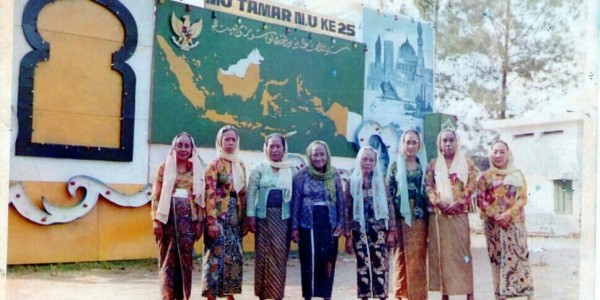
Historically, a significant shift occurred in 1916, when Pesantren Denanyar began accommodating female students. It marked a turning point. For the first time, women had structured access to pesantren education. This change also opened the door for nyai and ning—female leaders within pesantren—to take on roles beyond the domestic sphere, guiding and nurturing female students alongside male scholars.
The separation of male and female students further encouraged pesantren to develop dedicated spaces—both for learning and living—for women. And with that, roles began to shift.
Women in pesantren—whether as nyai or ustazah—gradually stepped into more active positions. No longer confined to managing households or preparing meals, they became educators, caretakers of knowledge, and institutional leaders. Mastery of the kitab kuning and Islamic social sciences was no longer the exclusive domain of men. Some even went further, establishing pesantren specifically for female students—an uncommon move at the time, but a powerful one.
To understand how women navigate leadership within pesantren, three key characteristics come into play: institutional independence, the centrality of the kitab kuning, and the underlying value system (Wahid, 1999). What’s clear is this: women have always been part of the pesantren story. It’s just that research has tended to spotlight the kyai—male scholars—while overlooking the equally vital roles played by women.