
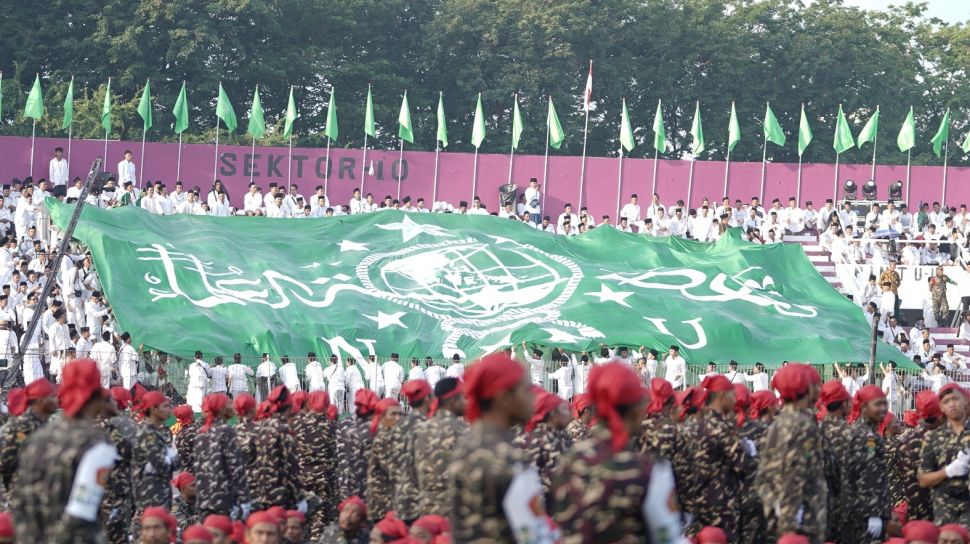
This marked a pivotal moment for traditionalist Muslims, who began to gain recognition for their role in safeguarding Islamic civilization. Many ulama proposed that the Hijaz Committee be formalized into a permanent institution to represent the aspirations and ideology of traditionalist Muslims. After receiving approval from Syaikhona Kholil, the committee evolved into what we know today as Nahdlatul Ulama.
From its inception, NU has contributed significantly to the nation, particularly in the struggle for independence from colonial rule. NU’s scholars (ulama) employed a unique strategy, issuing fatwas for jihad not only in a structural sense but also culturally. They instilled a sense of nationalism and cultural pride in the people, ensuring they were not influenced by colonial values.

However, by the 1940s, NU’s spirit began to waver, largely due to its involvement in national politics, a departure from its founding constitution of 1926. NU began to engage in practical politics, transforming from a purely Islamic organization into a political party.
Initially, NU joined other Islamic organizations in forming the Masyumi party. However, internal conflicts over the distribution of power led NU to break away and establish itself as an independent political party. NU’s efforts culminated in its strong performance in the 1955 elections, securing a significant number of seats in parliament.
Despite its political successes, NU’s focus on politics led to neglect of its social and educational missions. This shift toward political intrigue caused internal conflicts and diverted the organization from its core mission of serving the community and fostering religious education.
Recognizing these challenges, internal criticism led to a call for NU to return to its founding principles, the “Khittah 1926.” In 1984, during the 27th Congress in Situbondo, NU formally ended its involvement in practical politics, refocusing on its social, educational, and religious missions. This return to Khittah 1926 has guided NU’s activities since, laying the foundation for its renewal as a social-religious organization.