
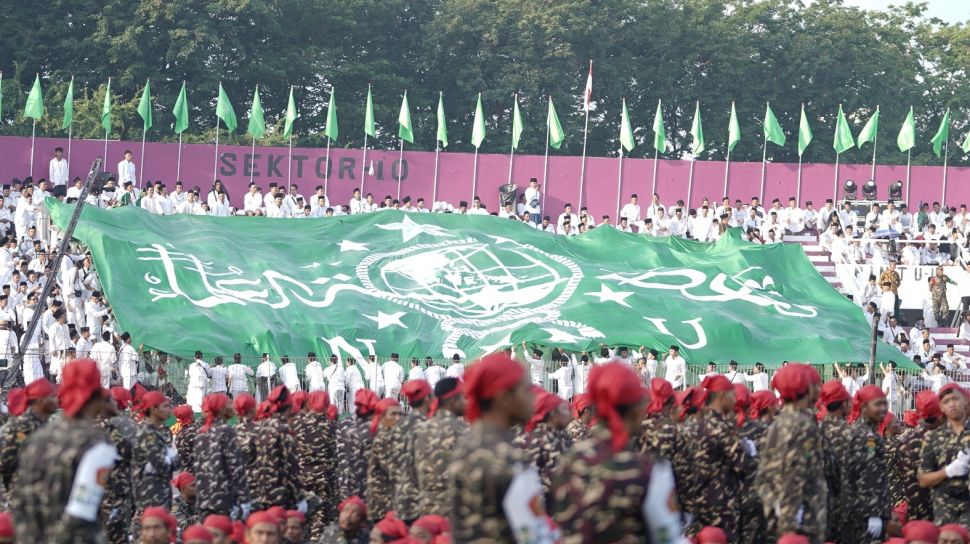
The decision to return to Khittah 1926 was not just a shift in political stance but also a reaffirmation of NU’s commitment to education, social welfare, and economic development. NU positioned itself as a “Jam’iyah Diniyah-Ijtima’iyah,” a religious and social organization independent of political affiliations. This transition from “practical politics” to “practical social work” marked a return to NU’s original prestige as a religious leader within society.
Today, NU faces significant challenges in realizing its vision, particularly in politics, education, and socio-economic development. Under the leadership of KH Yahya Cholil Staquf (Gus Yahya), NU must reflect on and develop tactical programs to address these areas.
Politics: NU’s political orientation is clear, focusing on national and populist politics, referred to by Kiai Sahal Mahfudh as “Siyasah ’Aliyah Samiyah” (high-level politics). The challenge lies in navigating practical politics, which has remained a persistent issue across various leadership periods. Allegations of PBNU’s involvement in supporting specific political candidates, as seen in recent controversies, highlight the difficulty in maintaining political neutrality.
Education: Education remains a major challenge for NU. In comparison to other organizations, NU lags behind, particularly in higher education, where Muhammadiyah has established a strong presence. Improving educational quality will require tapping into NU’s potential and strengths, fostering collaborations, and enhancing educational infrastructure through its educational institutions.
Socio-Economics: Perhaps the most complex challenge is in socio-economics. Many members of NU’s community have yet to achieve significant economic prosperity. While some initiatives have been introduced, such as the Koin NU program, more strategic efforts are needed to achieve economic independence and improve the welfare of NU’s members.
In terms of religious affairs, NU has been successful in instilling its values of tawasuth (moderation), tasamuh (tolerance), tawazun (balance), and i’tidal (justice). Looking forward, NU’s challenge in the religious sector may be to promote its inclusive and adaptive teachings globally.