
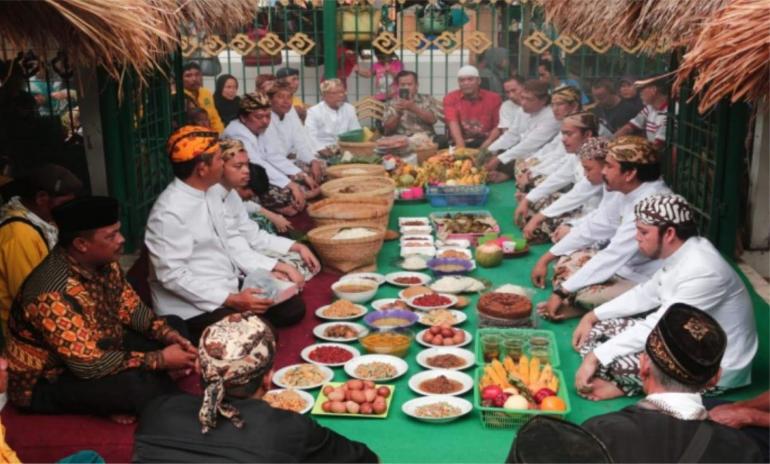
Islam Nusantara is incredibly varied. While some might hold a Java-centric view, assuming that the most authentic form of Nusantara Islam is Javanese Islam, it’s important to understand that Islam Nusantara refers to Aswaja (Ahlu al-Sunnah wa al-Jamaah), not as-Jawa (as Javanese). Javanese Islam is just one expression among many. Muslims throughout the Nusantara, whether in Java, Sumatra, Sulawesi, or elsewhere, each have their own distinctive Islamic practices.
For example, the tradition of tahlilan is widely practiced in the Nusantara, yet its implementation varies from one region to another. In Bolaang Mongondow, for instance, the ritual known as Mintahang involves reading the Monginsingok, a prayer in the Mongondow language, by the local council before the religious leader (jiou) recites the tahlil and prayers. In Gorontalo, during the 40-day tahlilan, there is a practice of distributing Bako-hati (charity boxes).

The Monginsingok in Bolaang Mongondow and Bako-hati in Gorontalo are unique to these regions and are not part of Javanese tahlilan practices. While some elements may be similar, such as the use of local language or the distribution of charity, these traditions reflect the rich diversity of Muslim practices in the Nusantara.
The variety of ways tahlilan is practiced is just one example of the broader diversity within the Nusantara’s Islamic practices. The relationship between local customs and religion also varies between regions like Java, Sumatra, and Sulawesi. The historical use of the headscarf in the Nusantara has ranged from face veils and long coverings to simpler headscarves, reflecting diverse cultural influences. Islamic education systems also differ, from Kiai-led Pesantren, to Buya-centered Surau, Abuya-led Dayah, and Jiou-led Sabuah, each contributing to the broader Islamic culture of the Nusantara.
Avoiding Prescriptive Authority
In this diversity, we must avoid falling into what Talal Asad describes in What is Islam? as prescriptive authority—the tendency to define Islam Nusantara based on a singular interpretation, such as a Javanese-centric view. This perspective overlooks the diversity of Muslim communities in the region and the many valid expressions of Islam in the Nusantara.
The discourse on Islam Nusantara should embrace an “explorative authority,” meaning we should explore and appreciate the many different expressions of Muslim identity across the Nusantara as authentic manifestations of Islam. Every ethnic group and Muslim community in this region has its own distinctive approach to Islam, contributing to the richness of Islam Nusantara.