
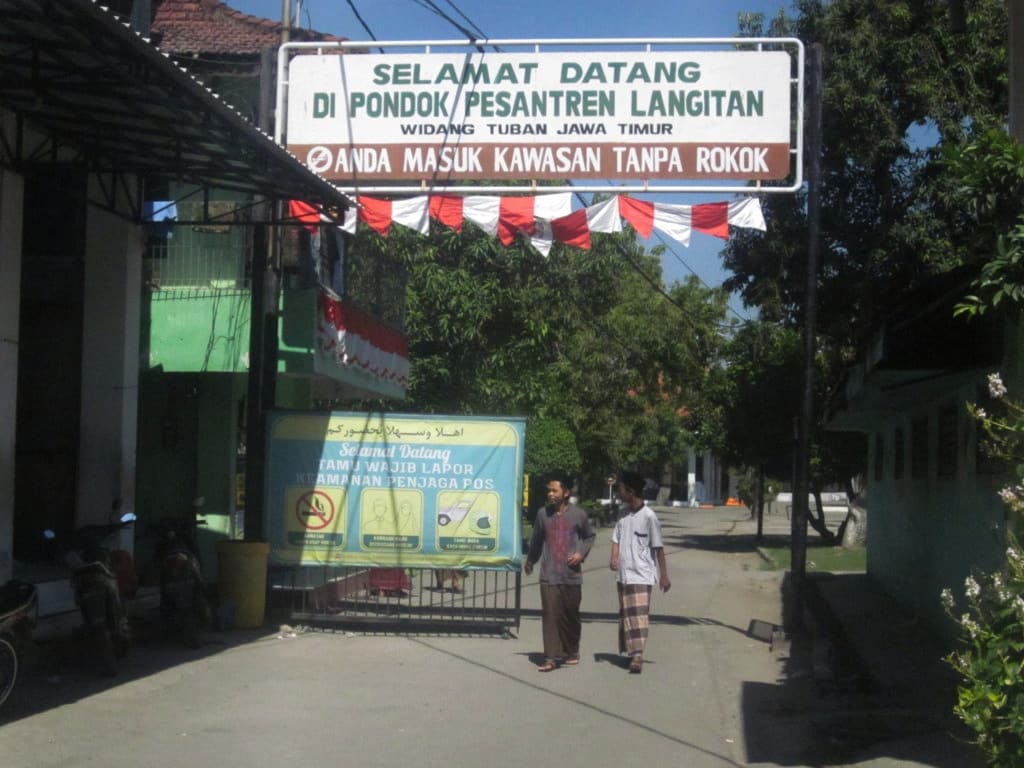
His method of teaching drew increasing attention, encouraging many parents to send their children to study with him. This growing interest eventually led KH Muhammad Nur to establish a langgar (small prayer hall), dormitories, and other essential facilities.
Over time, Langitan grew rapidly. KH Muhammad Nur led the pesantren for 18 years before passing away on 30 Jumadil Awwal 1297 H. Prior to his death, leadership had already been entrusted to his son, KH Ahmad Shaleh. After KH Ahmad Shaleh’s passing, leadership transitioned to his son-in-law, KH Chazin, who guided the pesantren for 20 years.

These two periods following the founding era marked a phase of significant growth. After KH Chazin passed away in 1340 H/1921 CE, leadership was handed to his son-in-law, KH Abdul Hadi Zahid. It was under his stewardship that Langitan underwent a remarkable transformation, particularly in its educational system.
The Figure of KH Abdul Hadi Zahid
KH Abdul Hadi Zahid was born on 17 Rabiul Awwal 1309 H in Kedungpring, Lamongan, East Java. He was the eldest son of KH Ahmad Zahid and Nyai ‘Alimah. His father was a prominent religious teacher and respected scholar in Kauman Kedungpring. From a young age, he began studying the Qur’an, the classical text Safina an-Najah, and practicing religious rituals under his father’s guidance. He later continued his education at Pesantren Kemisik in Lamongan, where he studied tajwid, Ummu al-Barahin, and other disciplines under Kiai Abdul Malik.
At the age of eleven, he moved to Pondok Pesantren Langitan, where he spent eight years deepening his knowledge of fiqh, theology, ethics, Arabic grammar, and Sufism under KH Chazin. He also studied for three years under the renowned scholar KH Kholil of Bangkalan at Pesantren Kedemangan in Madura. His pursuit of knowledge did not stop there. At 23, he continued his studies at Pesantren Jamsaren in Solo, focusing on fiqh under Kiai Idris, a leading scholar of the early 14th Hijri century.