
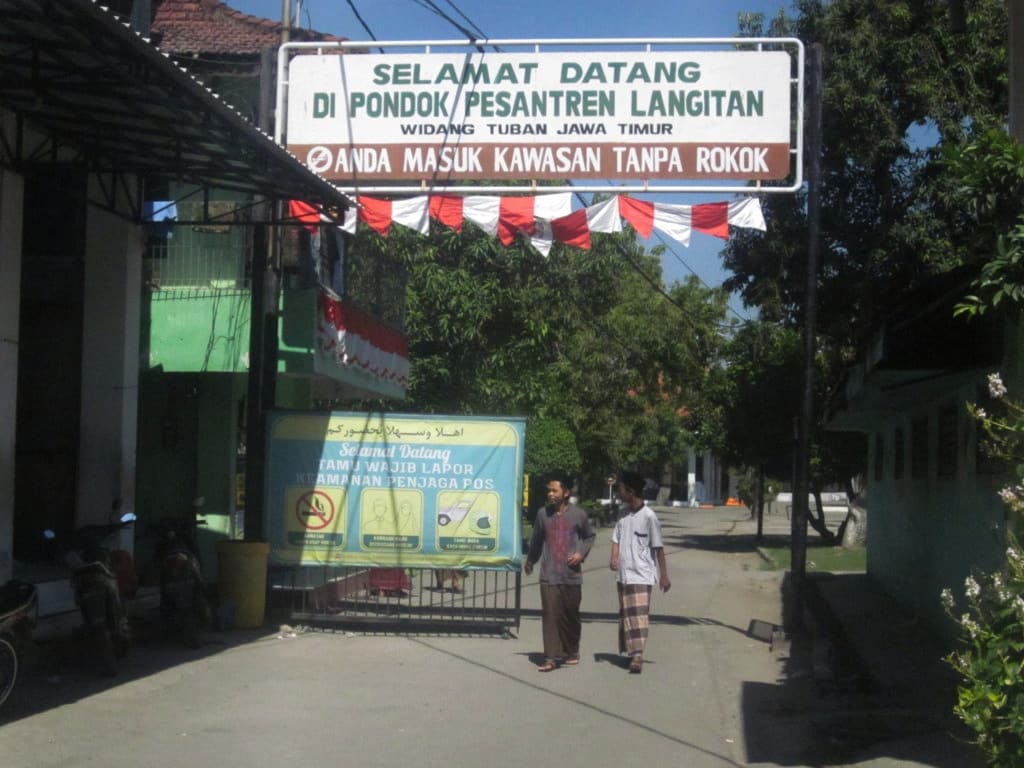
After years of study, he returned to Langitan—not only as a student, but also as a teacher, assisting in educating younger santri. His dedication led KH Chazin to take him as a son-in-law, marrying him to his daughter, Nyai Djuwairiyah, when he was 25. By the age of around 30, KH Abdul Hadi Zahid had already assumed leadership of the pesantren.
He was known for his perseverance and optimism. Guided by the principle “al-muhafadlotu ‘ala al-qodim as-sholih wa al-akhdhu bi al-jadid al-ashlah”—preserving what is good from the past while embracing what is better from the present—he introduced meaningful reforms across education, organization, and infrastructure. In 1949, he established formal education systems such as Madrasah Ibtidaiyah Falahiyah and Madrasah Mu’allimin Langitan, while still maintaining traditional methods like sorogan and wetonan.

During the transition from Dutch to Japanese rule, all activities at Langitan were temporarily halted. Many students returned home to join guerrilla resistance movements, while the pesantren complex was occupied by Japanese forces. Archives and documentation were destroyed and burned.
From 1945 to 1949, during the revolution, the closure continued as many santri joined the Sabilillah forces headquartered in Malang. After the revolution, in 1961, traditional study sessions resumed—this time open to both male and female students. The Madrasah Ibtidaiyah Falahiyah was reactivated in 1969, along with the introduction of a Madrasah Tsanawiyah level.
Under his leadership, extracurricular activities flourished. Organizational development was strengthened through the establishment of internal institutions such as Jam’iyatul Mubalighin (1960), focused on public speaking; Jam’iyyatul Qurro’ wal Huffadz (1961), dedicated to Qur’anic recitation; KESPOL (1966), a family organization within the pesantren; and Majelis Bahtsul Masail al-Waqiah (1967), a forum for discussing contemporary legal issues in Islamic jurisprudence.
As the number of students grew, facilities were expanded—dormitories for male and female students, school buildings, prayer halls, bathrooms, wells, and more. The library collection was also enriched with books in Indonesian, Arabic, and English. At its peak during this period, the pesantren housed around 600 students from various regions across Java, Madura, and even Sumatra.