
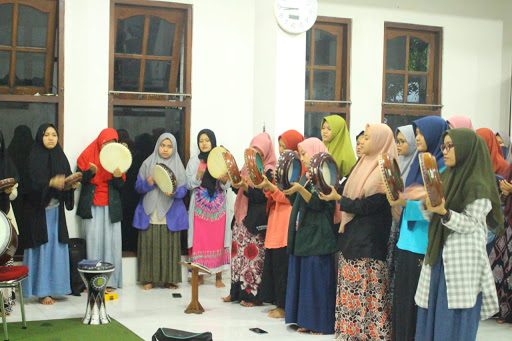
The Maulid Diba’ itself tells the story of the Prophet in a style that feels almost like a love letter—prose that flows with elegance, interwoven with verses brimming with longing and reverence for God’s chosen beloved. When we recite it, we’re not just reading text; we’re stepping into that emotion, letting it echo through our voices. Diba’an, then, becomes more than tradition—it’s an offering of love.
Within the pesantren, though, its role runs deeper. It quietly shapes character. It teaches patience, togetherness, and above all, tolerance. Because not everyone sees diba’an the same way. There are groups who regard it as bid‘ah—an unwarranted innovation. For them, commemorating the Prophet’s birth, especially through poetic recitations like Maulid Diba’, al-Barzanji, or al-Burdah, crosses a line. Some even argue that the narratives are fabricated or that the praises verge on excess, bordering on shirk.

And yet, this is where the lesson lies.
Tolerance isn’t just a concept we talk about—it’s a posture we choose. It means holding space for differences without letting them fracture our unity. For Muslims in the archipelago, diversity in practice has long walked hand in hand with shared faith. Traditions like diba’an don’t stand in opposition to Islam; they grow within it, shaped by culture, history, and collective memory.