
KH Hasyim Asy’ari stands among Indonesia’s most revered Islamic scholars, firmly rooted in the Ahlussunnah wal Jamaah tradition. Known affectionately as Mbah Hasyim, he is also recognized as a national hero whose legacy has found its way into formal education curricula. As the founder of Nahdlatul Ulama (NU), he was honored with the title Hadratussyeikh, a testament to his mastery of the Kutub al-Sittah. He was also called Syaikhul Masyayikh, the teacher of teachers reflecting his towering influence. The very existence of NU is inseparable from his name.

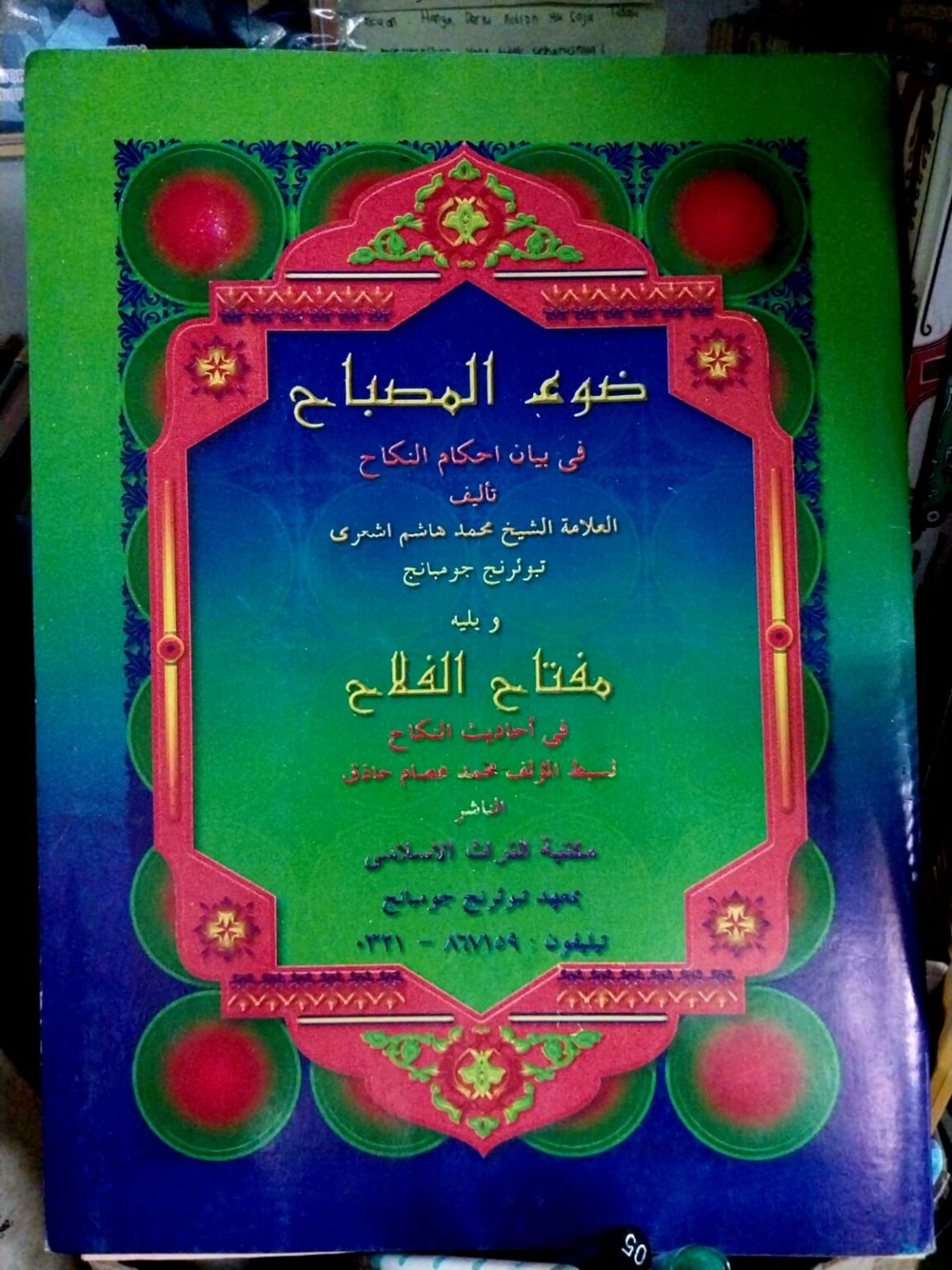
As a prolific scholar, Mbah Hasyim left behind numerous works that continue to be studied by generations of santri across Indonesia. One of them is Dhau al Mishbah fi Bayani Ahkami An-Nikahi.
Unlike many of his other writings that fall squarely within the genre of fiqh, this particular work takes a different path. It is a concise guide on marriage. Written by a scholar who grew up in the pesantren tradition, the book spans just 21 pages and can still be found in Maktabah Tsuraya in Jombang, the very pesantren he once led.
In his introduction, Mbah Hasyim explains the motivation behind the book: many santri had reached a mature age, ready to embark on married life, yet lacked a proper understanding of its pillars, conditions, and etiquette. This gap prompted him to create a practical guide, Dhau al Mishbah as preparation before marriage.
His care for students is evident in how the book is structured. It is divided into three parts: the opening chapter, the second chapter, and a closing section that discusses the rights of both الزوج and wife. This clear segmentation allows readers to focus on one core topic at a time, making the learning process more accessible.
With such a structure, the book becomes remarkably easy to grasp. Each discussion is centered on a single point, enriched by references to various scholarly opinions. This not only adds depth but also strengthens its arguments, making them more resilient. At the same time, it reflects Mbah Hasyim’s humility—inviting readers to consider multiple perspectives rather than imposing a single view.
The opening chapter explores the laws of marriage. It presents a range of perspectives, including the purposes of marriage: continuing lineage, safeguarding chastity, and fulfilling acts of worship that carry rewards in the hereafter. Interestingly, the legal ruling on marriage is not fixed, it shifts depending on one’s circumstances.
To find a suitable life partner, the book outlines clear criteria and selection guidelines. It encourages individuals to observe potential partners directly rather than relying on intermediaries. Beyond physical appearance, character and temperament are emphasized. Marriage, after all, is not merely about fulfilling physical needs, it carries deeper meaning. The presence of righteous individuals during the marriage contract is also encouraged, with the hope of attaining blessings. Additional recommended practices for the couple and their families are also discussed.
The second chapter delves into the pillars of marriage. The five essential elements, shighat (the contract statement), the bride, the groom, the guardian, and witnesses are explained in detail. Shighat is understood as the formal exchange between the guardian and the groom, and it must meet specific criteria to be valid. The other pillars are accompanied by clear conditions to ensure the marriage fulfills its legal requirements.
In the closing section, the book discusses the rights of the wife and the husband. Marriage is not simply about living together; it also demands mutual comfort and consideration. Interestingly, the rights of the wife receive more detailed attention than those of the husband. This likely reflects a deeper concern for understanding women, their needs, their complexities grounded in classical scholarship and divine guidance that remains relevant across time. Given that women often carry significant responsibilities in serving their husbands, the clarification of their rights becomes essential, ensuring men are aware and mindful of these nuances.
Towards the end of the book, KH Hasyim Asy’ari outlines three types of women: those who display themselves publicly during the day, those who cast seductive glances at men, and those who raise their voices so others may hear them.
Ultimately, this book serves as a valuable guide for santri who are preparing for married life. It equips both men and women with an understanding of their rights and responsibilities, helping to prevent misunderstandings that could strain a household. Accessible and affordable, the book remains widely available, both online and offline making it a timeless resource for all.