
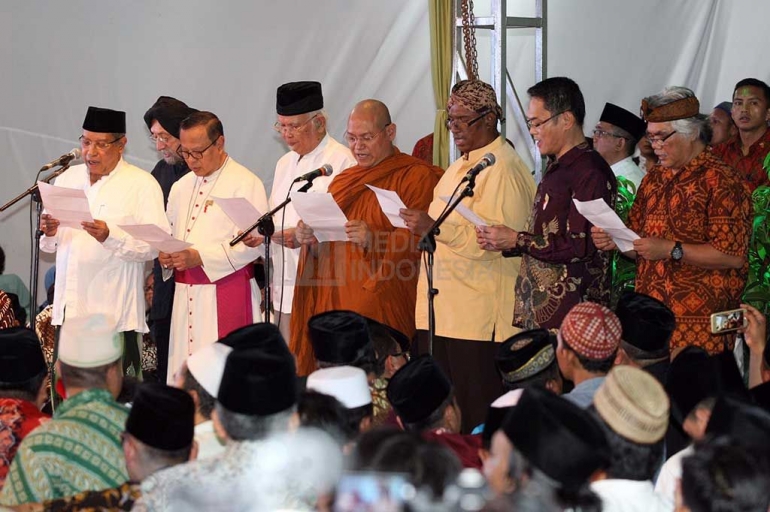
Yet good intentions do not always translate into fair outcomes. In several Muslim-majority countries, one can observe a subtle sacralization of state institutions and public space—often at the expense of minority religious expression. In more troubling cases, the most vocal defenders of religious orthodoxy go further, openly harassing and humiliating minority faiths.
So the question persists, and it is no longer academic: how far can Islam accommodate the values of religious freedom in a world defined by plural, and often competing, moral visions? There is, perhaps, another side to this story. The discourse around religious freedom can itself slip into a kind of ethnocentrism—one that judges Islam through a narrow, post-Enlightenment European lens.

In that framing, Islam is flattened into a monolith. Its internal diversity disappears, replaced by the assumption that it is inherently at odds with freedom—especially the kind of religious liberty championed in modern Western thought. To move beyond this impasse, we need a clearer conceptual footing, one that resists polemics and opens space for a more careful reading of both traditions.
If we turn to the Qur’an, along with the technical vocabulary of Islamic jurisprudence (ushul al-fiqh), a more textured picture begins to emerge. The right to embrace—or reject—religious belief is famously articulated toward the end of Surah al-Baqarah: “There is no compulsion in religion” (2:256). Coercion, particularly in matters of faith, is discouraged in favor of voluntary commitment.
Still, it would be a stretch to claim that religious freedom stands at the very core of the Qur’anic worldview. Elevating it into an absolute, untouchable principle risks oversimplifying the broader ethical landscape of the text. And yet, the verse remains. It cannot be dismissed. Its presence alone invites a deeper reflection on its moral weight and implications.