
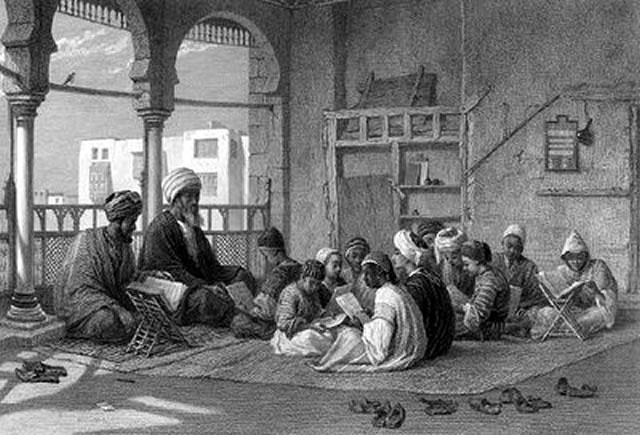
Indirect networks are subtler. They emerge when scholars don’t share the same teacher, but their teachers do. Or when they draw from the same texts, inherit the same intellectual traditions, or orbit around a shared center of learning.
Again, the Wali Songo offer a telling example. Kalijaga studied under Bonang, who had studied at Ampel. Meanwhile, Datuk Ri Bandang, known for spreading Islam in eastern Indonesia, studied at Giri—whose founder, Sunan Giri, had also studied in Ampel. No direct link between Kalijaga and Datuk Ri Bandang—yet both are quietly connected through Ampel’s intellectual lineage.

This is how networks breathe: not always through visible ties, but through shared roots.
Why This Matters
The theory of ulama networks does more than map relationships—it reframes how we read history. Through Azra’s lens, the story of Islam in the archipelago becomes less about isolated figures and more about interconnected lives.
And that changes everything.
We begin to see patterns where there once seemed to be fragments. We understand how ideas traveled, how teachings evolved, how communities were shaped—not by chance, but through the steady presence of scholars working within networks that stretched across oceans and generations.