
#Reflecting on the Colonial Bias Still Living Inside Us
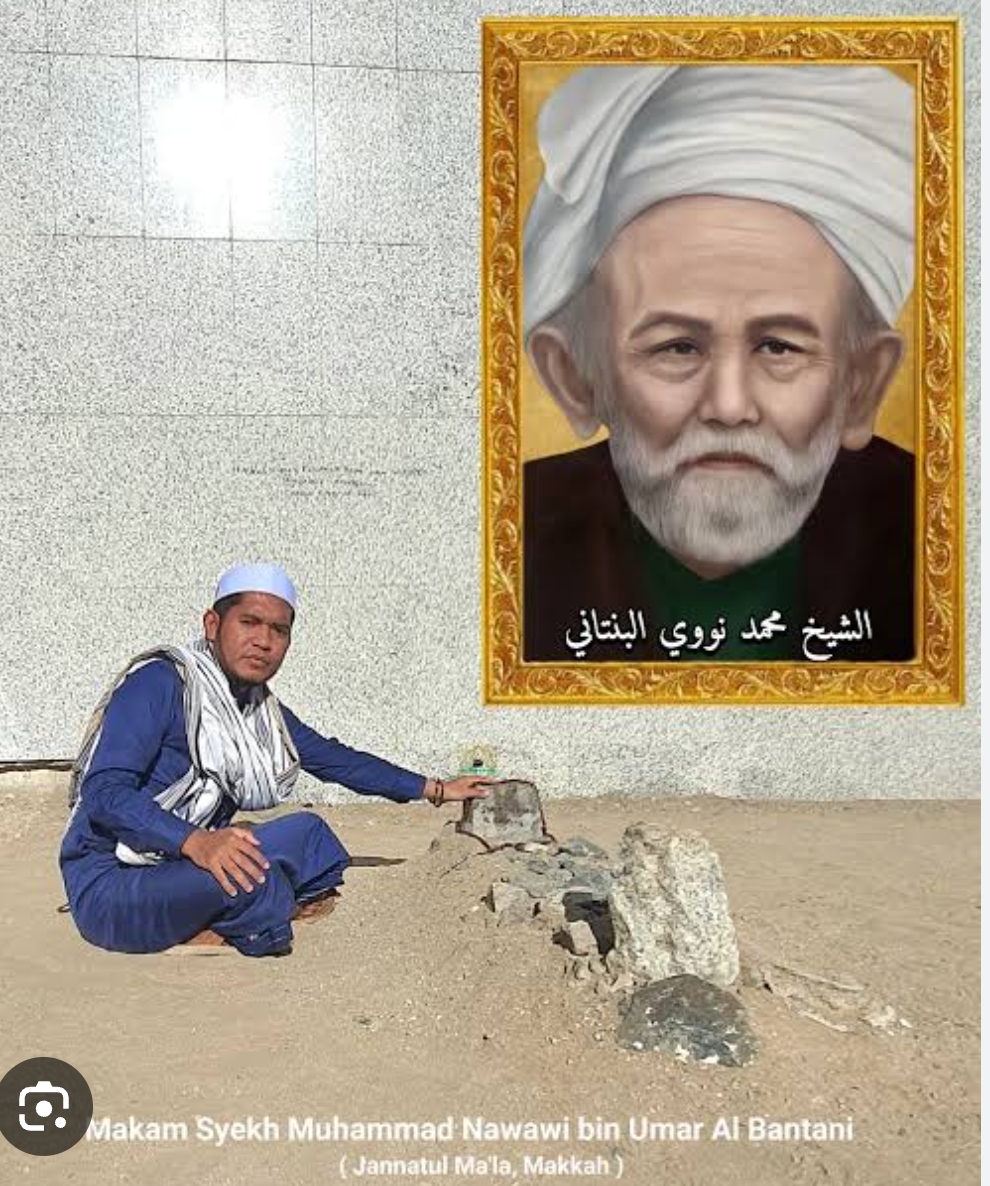
Banten is marâh labîd—“a resting place for birds that come and go.” Marâh Labîd is also the title of Sheikh Nawawi Banten’s thirty-volume Arabic Qur’anic commentary. Since the late nineteenth century, that work has been published by Middle Eastern presses—and, of course, by Indonesian publishers as well.

Following in Sheikh Nawawi’s footsteps, we may read Banten as “a resting place for birds that come and go,” a place where ideas and the spirit of an age briefly perch, catch their breath, and then take flight again bearing new messages. In that metaphor, Banten appears not merely as a geographic region, but as a cultural space that receives, tends, and sends forth spiritual and intellectual energy into the open sea.
And now, at the harbor of Banten, the ringing of two bells sounds out—clear, forceful, but pitched differently, and coming from different directions. The sea of Banten knows that one of those bells tolls from Mecca, the other from the Netherlands.
History, though, has often heard one of those tolls more clearly, while allowing the other to reverberate in silence—a distortion that lays bare the colonial bias embedded in our memory. Amid the rippling water, Sheikh Nawawi and Multatuli are the tolling bells of the nineteenth century, still answering one another in the twenty-first. Their imagined conversation is an unfinished inheritance, an invitation not only to listen, but to ask: why is one voice remembered with grandeur, while the other must be excavated from layers of historical dust?
So from the harbor of Banten, we set sail far away—to Mecca. There, on the threshold of the holy land, we follow the path of a child from Tanara who would one day offer himself as a glowing ember of anti-colonial resistance—not with blades or cannons, but with a pen: Sheikh Nawawi al-Bantani.
He chose a different battlefield—not the chaos of open combat filled with the roar of artillery, but a quiet room lit only by an oil lamp. There, with ink and patience, he built a fortress no army could tear down. Every stroke of his pen was a tactic of resistance; every book that came from his hand was ammunition to defend the dignity of a people who, at the time, did not even yet have a name. From his modest room in Suqu ’l-Lail, Mecca, he sent out not troops, but ideas. He sparked not physical war, but a revolution of consciousness. The pen became his weapon, sanad his network, and tawhid the ground from which he launched every assault against injustice.
He left his homeland not to flee colonial rule, but to seek knowledge so that one day he might awaken the soul of a people not yet called a nation. He carried no weapon, only a pen and memory. Yet from afar, he laid the quiet foundations of nationalism long before the word itself was familiar to the tongues of ulama—or even to the pens of intellectuals. Here, the term nationalism is used heuristically, not anachronistically.
Then from Mecca we sail to Amsterdam, where we meet a very different figure: Eduard Douwes Dekker, known to the world as Multatuli. He was no cleric, no spiritual guide, but a troubled former colonial official. If Sheikh Nawawi wrote out of the clarity of faith, Multatuli wrote out of a wounded conscience. Their pens came from distant worlds, yet both scratched at the walls of colonialism from opposite sides at once: one fortifying the inner life of the colonized, the other unsettling the conscience of the colonizer.

The two men never met in actual history. But that is precisely what makes it so compelling to place them side by side in an imagined history. They did not know one another, did not read one another, never sat at the same table. Yet while Sheikh Nawawi was teaching Qur’anic exegesis in the colonnades of the Grand Mosque, Multatuli was writing the story of Saijah and Adinda in a rented room in Europe. They did not speak to each other, but history allowed their voices to echo across the distance.
Though they lived in different places, they lived in the same era. When Max Havelaar was published in the Netherlands in 1860, Sheikh Nawawi was fifty-two years old—an age of full maturity for a scholar. They may never have heard each other’s names, but the age they breathed was the same: an age when colonialism stood at the height of its power even as it was beginning to be challenged from the depths of human conscience. One built an argument for justice from proofs and chains of transmission; the other built resistance through satire and irony. They never greeted one another across a table, yet history brought them together in the same time—like two bells struck from different directions, producing the same tremor of sound, though in different keys.
We are not artificially pairing two figures here. We want to hear the resonance they produced and ask: how is it that a cleric who never uttered the name Indonesia, and a colonial writer who never set foot in Tanara, became two of the earliest pillars of our national consciousness? They never met, yet the sea of Banten today can still hear them calling to one another from afar. And that is where our voyage truly begins—not by asking who contributed more, but by listening to how each of them speaks to the future.
Sheikh Nawawi Banten: The Womb of Nationalism in the Holy Land
Tanara bore witness when that baby was born in 1813. He grew up in that village, a place ringed by rice fields and rivers, far from the centers of power but close to the center of meaning. From the womb of that land, the young Sheikh Nawawi grew as the son of a village religious official, absorbing knowledge not only from books, but from a simple life steeped in wisdom. The wind of Tanara and the soil of Banten carried him when he sailed to Mecca while still young. He did not bring ambition. He brought a deep longing for a liberating knowledge.
In the holy land, he eventually became an imam at the Grand Mosque and a teacher to hundreds of students from the archipelago and the wider Islamic world. Yet though his body settled in the Hijaz, his spirit kept returning home to Banten. He wrote book after book—on jurisprudence, exegesis, ethics—each one becoming a lamp for pesantren back home. He wrote as though whispering, “Through this ink, I am always on my way home.”
In his small house in Suqu ’l-Lail, Mecca, Sheikh Nawawi taught more than two hundred students from across the archipelago. He did not hand them weapons; he gave them exegesis. He did not teach the strategy of war; he taught the jurisprudence of justice, the ethics of courage, and a tawhid that refuses to bow before anything other than God.
In every letter he wrote, there was a quietly inserted ember: that knowledge is itself a form of resistance, and that injustice cannot thrive on soil guarded by enlightened souls. He did not begin resistance with weapons, but with a pen writing in silence. He did not protest through speeches, but through exegesis that shaped the soul.
The trees of Tanara and the sea of Banten bear witness: Sheikh Nawawi breathed that spirit out not only across Banten, but throughout the archipelago.
His modest home became the ground where the seeds of national consciousness were planted, where the grains of patriotism were sown. Those seeds would one day grow into the tree of nationalism—a nationalism that, in the hands of his spiritual disciples, would wrestle fiercely with colonialism.
The house was not large in physical size, but inwardly it was vast—because there, the spirit of a nation was shaped not through power, but through patience. From that room, waves of knowledge spread to Tanara, to Caringin, to Bangkalan, across the whole archipelago. They carried a spirit of patriotism that would later mature into Indonesian nationalism. That house was a womb of history: narrow for the body, immense for the soul. From it were born guardians of the national spirit. Sheikh Nawawi Banten was a womb of patriotism and nationalism.
How, then, did Sheikh Nawawi plant the seeds of national feeling, love of home, love of country, patriotism?
Nationalism as a word was still unknown in the histories of that age. The dawn of Indonesian nationalism had not yet broken; it still lay beyond the dark horizon of history. Yet in his works, Sheikh Nawawi explicitly referred to himself as at-tanâri dâran—“a man of Tanara”—and al-bantani iqlîman—“from Banten.” More than that, he even called himself al-jâwi—“a man of the Malay-Indonesian archipelago.”
This was more than a simple expression of homesickness. Through those self-attributions, Sheikh Nawawi quietly planted a sense of collective identity that reached beyond geography. From faraway Mecca, he built a narrative of belonging through spiritual and cultural language, turning origin into a matter of honor and responsibility. In every mention of his local and regional identity there is an implied invitation: love of homeland is part of faith and service.
It is important to note that these references to Tanara, Banten, and Java—that is, the archipelago—appear in the body of his own texts (see, for example, Syarh Kâsyifah al-Sajâ, p. 2). In other words, they are not editorial or publisher additions, but Sheikh Nawawi’s own words. That matters. It shows that geographic and cultural identity were not incidental markers of origin, but a self-conscious affirmation he deliberately inscribed.
When a great scholar living far away in Mecca calls himself al-Tanârî, al-Bantanî, or al-Jâwî, he is building a symbolic bridge between the land of his birth and the global center of Islamic learning. At the same time, this rejects intellectual anonymity: he wanted to be known as belonging to the archipelago, not dissolved into Arab cosmopolitanism alone. Here we see the embryo of national consciousness—the courage to name one’s homeland as a source of dignity and identity.
It is also worth noting that compared with calling himself a man of Tanara or Banten, Sheikh Nawawi more often explicitly described himself as al-Jâwî, “a man of the archipelago” (see, for instance, al-Tsimâr al-Yâni’ah fî al-Riyâdl al-Badî’ah, Nashâih al-‘Ibâd, and Fath al-Majîd fî Syarh al-Durr al-Farîd). That suggests that his longing for home expanded into a collective identity that moved beyond village and region.
By calling himself al-Jâwî, Sheikh Nawawi affirmed that he belonged to a broader imagined community: the world of islands that would one day be called Indonesia. This identity was not merely geographic. It was a spiritual pledge that the knowledge he taught was meant to liberate Muslims in distant lands—from Sabang to Madura, from Banten to Maluku.
This nisbah carries a transregional vision, a still-vague but already-rooted seed of national belonging, in which “Java” functioned as a metonym for the whole archipelago. So every word born from his hand did not simply return to Tanara; it sailed across the archipelago, nurturing an imagination of nationhood larger than anything he himself may have lived to see.
In fact, Sheikh Nawawi’s attribution to three regions at once—Tanara, Banten, and the archipelago (Java)—was unusual in the Islamic tradition of geographic affiliation. Normally, a nisbah refers to one place of origin or residence, serving as a marker of identity, scholarly lineage, and cultural belonging. This pattern was established from the earliest Islamic period: Salman al-Farisi was linked to Persia, Habsyi bin Harb al-Habsyi to Abyssinia. Later scholars maintained the same convention by affiliating themselves with just one place, whether birthplace or residence. Ibn Qudamah al-Maqdisi (d. 1223) was linked to Jerusalem, Abu ‘Abdillah al-Qurthubi (d. 1273) to Cordoba in al-Andalus, Ibn ‘Atha’illah al-Sakandari (d. 1309) to Alexandria in Egypt. In that tradition, the nisbah was a clear, singular claim to identity.
That is why Sheikh Nawawi’s decision to identify himself not only with Tanara, his birthplace, but also with Banten and the archipelago, marks a deliberate departure from convention. This double—even triple—nisbah suggests that he was not simply locating identity in the narrow locality of origin, but affirming historical, religious, and cultural connectedness to a larger social space. Through those attributions, Sheikh Nawawi was imagining himself as part of a broader collective that stretched beyond his village. That is where the seed of national consciousness begins to grow.
It should also be noted that on the inner title pages of almost all his books, the works are identified as those of Nawawi al-Jâwî (see, for example, Marâqî al-‘Ubûdiyyah, Tîjân al-Durârî fî Syarh Risâlah al-Bâjûrî, and Salâlim al-Fudlalâ’ ‘Alâ Hidâyah al-Adzkiyâ’ ilâ Tharîq al-Awliyâ’).
The attribution al-Jâwî on those title pages may well have been supplied by editors or publishers rather than Sheikh Nawawi himself. But that only reinforces the point: publishers and readers alike recognized and confirmed al-Jâwî as inseparable from his scholarly authority.
So this identity was no longer merely a personal claim. It had become a collective stamp, one acknowledged by the book market and the print tradition. In that way, al-Jâwî became something like an intellectual-spiritual brand, as well as a collective identity: a sign that Sheikh Nawawi’s works belonged not only to the general Islamic world, but also represented a voice from those distant islands called the archipelago. It was in this sense that Sheikh Nawawi planted the seeds of nationalism.
At the same time, his interpretation of the Qur’anic phrase ulî al-amr in Marâh Labîd shows that he never turned a blind eye to the socio-political dimension of the Qur’an. For him, ulî al-amr was not simply a symbol of obedience to rulers, but a grave trust that is only valid when grounded in justice, concern for the people, and fidelity to the divine law. He stressed that oppressive rulers or those who abuse authority do not, in fact, qualify as ulî al-amr. As recent scholarship has shown (Khuluqi, 2020), this interpretation offers an implicit critique of rulers who neglect their trust and oppress the people.
In Marâh Labîd, Sheikh Nawawi (1998a: 204) writes:
والمراد بأولى الأمرجميع العلماء من أهل العقد والحل وأمراء الحق وولاة العدل. وأما أمراء الجور فبمعزل من استحقاق وجوب الطاعة لهم …. قال بعضهم: طاعة الله ورسوله واجبة قطعا، وطاعة أهل الاجماع واجبة قطعا، وأما طاعة الأمراء والسلاطين فالأنثة أنها تكون محرمة لأنهم لا يأمرون إلا بالظلم، وقد تكون واجبة بحسب الظن الضعيف.
“What is meant by ulî al-amr is all scholars among those vested with authority to bind and loose affairs, the leaders of truth, and just rulers. As for tyrannical rulers, they are entirely excluded from deserving obligatory obedience…. Some scholars have said: obedience to God and His Messenger is categorically obligatory, and obedience to the consensus of the community is categorically obligatory. As for obedience to rulers and sultans, the default ruling is that it is forbidden, because they command nothing but injustice, though in rare cases it may become obligatory on the basis of a very weak presumption.”
This exegesis shows that Sheikh Nawawi did not recognize political authority built on injustice, and therefore implicitly delegitimized the colonial government that oppressed the people. He also placed the scholars among the ulî al-amr—that is, among the moral-political authorities of the community—imagining a community of leadership broader than the state alone. That is the moral-political foundation we may read as the embryo of Sheikh Nawawi’s nationalism: a collective consciousness that the community should submit only to just authority, and reject unjust rule, colonialism included.
From here it becomes clear that Sheikh Nawawi was not merely a “bookish scholar” in some dry sense, but a cultivator of political-moral ideas. His criticism of deviant rulers could be read as a mirror for people living under colonialism: rulers who oppress are not worthy of obedience. In this way, his exegesis of ulî al-amr sowed the seed of a collective awareness that the community has the right to demand justice from whoever rules over them. He planted a moral nationalism—the conviction that communal identity and homeland can stand upright only when leaders uphold trust. In the hands of his students, that teaching developed into real energy of resistance in history, becoming a collective moral summons of imagined commonality in the face of colonialism—from the Banten Peasant Revolt of 1888 to the Jihad Resolution of Surabaya in 1945.
We need to place Sheikh Nawawi in the context of modern theories of nationalism that emerged in the West, because the ideas and sensibilities of his time did not develop in a vacuum. He planted his seeds of nationalism in the nineteenth century, when the world was moving in a new direction, marked by the rise of national consciousness and the will to form nation-states.
Hans Kohn (1955: 11) argued that since the late eighteenth century, nationalism in the modern sense had come to be understood as a generally recognized collective feeling, and from then on “nationalism played an ever-increasing role in shaping all aspects of life.” From Europe, the nationalist spirit spread across the world.
So when Sheikh Nawawi was writing and building his intellectual networks, he was living within a global current undergoing a deep transformation in how human beings imagined community, negotiated sovereignty, and defined shared identity. The nineteenth century was not only the era when nationalism grew in Europe; it was also the period when those ideas began to affect colonies in Asia and Africa, including the Dutch East Indies. It is in that landscape that the seeds of religious nationalism planted by Sheikh Nawawi acquire their historical relevance.
We also need to place Sheikh Nawawi within Benedict Anderson’s framework of nationalism, since Anderson provided one of the most influential theoretical foundations for understanding the nation. In Imagined Communities (1983), Anderson argues that the nation is not a natural entity but a social construct—an “imagined community.” It is imagined because its members do not know one another directly, yet still feel themselves part of a single collective. What makes that bond possible, Anderson argues, is a shared experience produced by modern media, especially print, through what he calls print capitalism. Publications circulated through print capitalism unify language, discourse, and political imagination.
For Anderson, print media creates a space of simultaneous experience. A person reading a newspaper in Java and another reading one in Sulawesi, though they never meet, can feel that they inhabit the same time, the same space, the same reality. This is what he calls homogeneous, empty time—the modern linear concept of time that makes national consciousness possible. Mass-printed vernacular languages replace the dominance of Latin or Old Javanese, enabling people to imagine themselves as part of a broader community.
Anderson’s thesis remains important because it explains nationalism as a cultural phenomenon born from media, rather than from ethnic or religious “destiny.” But the framework is still rooted in European modernity. It misses other routes by which collective consciousness may form—for instance, through networks of ulama, pesantren, and religious texts that circulated through manuscripts before the era of mass print capitalism.
That is precisely where Sheikh Nawawi al-Bantani’s thought, with the al-Jâwî identity he asserted in his books, can be read as an embryonic national consciousness that differs from the route imagined by Anderson. Put differently, Anderson’s theory of nationalism, powerful as it is, remains grounded in European experience. The archipelago had another path: the path of kitab kuning, Sufi orders, and the courtyards of pesantren.
In this sense, the pesantren intellectual tradition offers a route different from the one Anderson describes. For Anderson, nationalism emerges from newspapers, vernacular language, and print capitalism. But for the pesantren world, collective consciousness grows from kitab kuning—whether copied by hand or later printed—and above all from sanad, stretching across generations, and from oral teaching in prayer halls and village schools.
The identity al-Jâwî that Sheikh Nawawi affirmed in his books turned the community of his students and readers into a pesantren-style imagined community: they did not know one another personally, yet they felt connected through a shared scholarly lineage and cultural identity that transcended regional boundaries. Here, the embryo of nationalism was born not from the modern print market, but from the spirituality of classical texts, the network of scholars, and the subtle pledge of a Banten scholar in the holy land.
This is where Sheikh Nawawi opens a different route—one that both expands and corrects Anderson’s thesis. If Anderson emphasizes newspapers and print capitalism as the engines of imagined communities, Sheikh Nawawi shows how a similar community may be formed through religious books copied by hand, transmitted, and taught across pesantren. Students in Tanara, Caringin, Bangkalan, across Java and as far as Sulawesi, read or heard the same texts from a teacher, referred to the author as al-Jâwî, and felt themselves linked by ties of learning and collective identity.
In other words, nationalism along the pesantren route did not emerge from the modern reading room, but from the traditional halaqah; not from the simultaneity of the morning newspaper, but from the continuity of sanad linking teacher and disciple across generations. It was in those quiet spaces that national imagination was sown, with the kitab kuning as its medium, and love of homeland as the spirit burning within it.
At first, Sheikh Nawawi’s books circulated in manuscript form through the handwritten culture of copying. Students brought lesson notes home from Mecca, copied them again in pesantren, and passed them on to other students, who copied them again and again. That is how works like Nashâih al-‘Ibâd or Syarh Kâsyifah al-Sajâ first became known and circulated through pesantren long before they were printed.
Then, in the 1880s, Sheikh Nawawi’s works began to enter the world of modern printing in Cairo and Bombay—Marâh Labîd, for example, was first printed in Egypt in 1887. From that point on, his books traveled along two routes at once: they remained alive in the manuscript tradition of pesantren, while also circulating through print capitalism, which enabled them to cross geographic borders more quickly.
That dual position is what makes him so interesting. On the one hand, Sheikh Nawawi inherited an older mode: an imagined community formed through sanad and manuscript. On the other, he entered the modern orbit of print, widening the reach of his readership. For that reason, he can be seen as a bridge: the womb of nationalism born from silent manuscripts in pesantren rooms, and at the same time an early actor who made use of print capitalism to spread knowledge throughout the archipelago.
Even though Sheikh Nawawi can thus be called an early actor in the orbit of print capitalism—with Marâh Labîd already published in Cairo in 1887, and other works circulating in Singapore, Penang, and Batavia—he still slips past Anderson’s lens. Why? Because Anderson limits “print capitalism” to newspapers and novels in vernacular languages, while Sheikh Nawawi wrote in scholarly Arabic and distributed his works through pesantren networks. Yet those very books formed an imagined community of santri across the archipelago, from Tanara to Sulawesi. In that sense, Sheikh Nawawi reveals a side of print capitalism that Anderson’s camera misses: in the archipelago, the embryo of nationalism was born not only from secular modern media, but also from religious texts that bound the community together in the language of faith and scholarly tradition.
So there he was, in the quiet alleys of Mecca, teaching not only knowledge, but a love of homeland that never shouted, yet ran very deep. He never said “Indonesia”—because that political entity did not yet exist—but he named his homeland, Banten, with an undying longing. He wrote with the nisbah “al-Bantani,” not merely as a geographic marker, but as a spiritual pledge: that the knowledge he taught was meant to liberate his birthplace from ignorance and subjugation. All of this spread across the archipelago through manuscripts and print capitalism. So Sheikh Nawawi is not an exception to Anderson’s theory. He is evidence of an alternative path of nationalism, one that may in fact be more relevant for understanding Indonesian history.
And once again, this is where Sheikh Nawawi widens and corrects Anderson’s thesis. If Anderson says the nation is an imagined community born through print media such as newspapers, Sheikh Nawawi shows another path: imagined community can also be born through kitab kuning and the sanad of pesantren.
This approach becomes even more compelling when placed alongside Steven Grosby’s framework (2011), which understands nationalism as a primordial social bond stretching back to ancient times, rooted in territorial boundaries—sacralized attachment to homeland—and strengthened by religion as a source of collective identity. For Grosby, the nation is not an invention of the nineteenth century, but a primordial human impulse to form communities bound to territory, like ancient Israel bound by divine covenant, shared law, and the distinction between “us” and “them.”
As a primordialist thinker of nationalism, Grosby sees religion as a basic element in the formation of nationalism through humanity’s foundational social bonds. Nations are not merely modern constructs, but transcendental impulses to form communities tied to land. Religion—whether Judaism, Christianity, or Islam—sacralizes territory, turning it into homeland endowed with deep spiritual meaning, thereby creating a collective sense of belonging that transcends time.
Specifically in the Islamic context, Grosby (2011: 126–127) cites Ibn Khaldun (1332–1406), who in the Muqaddimah explains how cohesive group solidarity (‘ashabiyyah) forms the collective consciousness of Muslim communities. According to Grosby, ‘ashabiyyah “strengthens a collective self-consciousness of kinship beyond its literal reference to family, extending to attachments found among neighbors, allies, and the state (dynasty).” In this light, ‘ashabiyyah is not merely blood or tribal solidarity, but a primordial force that unites the community against external threats such as colonialism, making territory into a sacred homeland that must be defended. This aligns closely with the way Sheikh Nawawi, through his al-Jâwî identity, built a collective solidarity of the archipelago that surpassed local boundaries, sowing seeds of resistance rooted in the shari‘a and scholarly sanad.
Grosby goes further, highlighting how the Islamic concept of ummah is unified by narratives of migration and struggle that turn geography into sacred space requiring defense—much like Canaan in Jewish tradition or holy land in Christianity. Religious law, such as the shari‘a, functions as a shared moral framework governing collective life, legitimizing just authority while providing grounds to reject tyranny. In that way, religion strengthens national cohesion through divisiveness—the distinction between “us” (the faithful community) and “them” (outsiders or enemies). This is not conflict for its own sake, but the historical basis of solidarity, with religion serving as an emotional adhesive of identity, especially in the face of colonial threat.
Grosby analogizes the formation of Muslim collective consciousness to that of Jews and Christians: shari‘a as divine law, akin to Torah or church canon, creating a political-moral order that binds the community together, where fidelity to shari‘a becomes a pledge of loyalty to territory and collective identity. The distinction between “us” and “them” is not only external—Muslims versus non-Muslims—but internal as well, encompassing differences of school or ethnicity within the ummah, which in fact enrich the broader cohesion. Grosby stresses that Islamic nationalism arises from this tradition, where religion provides the historical “chain links” that transmit a spirit of resistance, making it an authentic form of collective consciousness rooted in territory, law, and identity distinction—not merely a political ideology, but something perennial in human life.
Through Steven Grosby’s lens, nationalism appears as a primordial phenomenon shaped by religion. In that light, Sheikh Nawawi al-Bantani emerges as a key architect in forming the archipelago’s collective self-awareness.
First, through a sacralized attachment to territory, Sheikh Nawawi consistently identified himself as “al-Tanârî, al-Bantanî, al-Jâwî” in his works. These affiliations were not just geographic markers, but spiritual and emotional declarations that the archipelago—especially Banten—was homeland with transcendent meaning, something to be protected and defended. Though he lived in Mecca, his ink became a spiritual bridge connecting Muslims in the archipelago to the center of Islamic learning, while at the same time sacralizing Banten as the point of departure for collective consciousness. This fits Grosby’s view that religion gives sacred attachment to territory, transforming land from mere geography into a source of dignity and identity worth struggling for. Sheikh Nawawi’s exegesis forbidding obedience to unjust rulers—in the context of Dutch colonialism—becomes a rejection of foreign interference that defiles the sanctity of homeland, casting Islam as the protector and liberator of the land.
Second, Sheikh Nawawi shaped nationalism through shared law (shari‘a) and the distinction between “us” and “them,” which resonates with Grosby’s primordial divisiveness. His books, such as Marâh Labîd with its interpretation of ulî al-amr, taught not only ritual but also principles of justice and Islamic morality that became the basis of social and political order. The shari‘a he taught insisted that obedience is legitimate only when grounded in justice, thereby implicitly rejecting the legitimacy of oppressive Dutch colonial power. This formed a collective identity of “us”—the Muslims of the archipelago rooted in shari‘a—clearly distinguished from “them”: tyrannical colonial rulers and cruel indigenous collaborators.
The sanad and pesantren networks he built became the “chain links” through which this consciousness was transmitted, binding students and scholars across generations in a primordial social relation, in Grosby’s sense, that encouraged resistance. In this way, Sheikh Nawawi taught not only religion, but also sowed the seeds of a shari‘a-based moral nationalism, forming an al-Jâwî community inwardly bound by Islam and outwardly united against colonial threat.
In Grosby’s framework, the nation planted by Sheikh Nawawi al-Bantani through the identity al-Jâwî and his sanad networks is a strong primordial foundation—a social bond rooted in sacralized territoriality (Banten-archipelago as homeland sanctified by faith), a shared shari‘a (as in the exegesis of ulî al-amr delegitimizing tyrannical rulers), and the distinction between “us” (the Muslims of the archipelago) and “them” (colonial occupiers). This was not nationalism as a modern political ideology demanding a nation-state, but nationhood as an inherent and enduring structure, akin to the ancient communities Grosby describes. Sheikh Nawawi planted these seeds through books circulated via manuscripts and pesantren, forming a collective self-awareness rooted in Islamic tradition—a “womb of nationalism” that was calm, slow-burning, like embers banked in a furnace, ready to flare when history demanded it.
And those seeds became nationalism in the hands of his students who engaged colonialism directly, much like Sheikh Nawawi’s embers becoming flame in their hands. Students such as Sheikh Mohammad Arsyad Thawil (involved in the 1888 Banten Revolt and exiled to Manado), Sheikh Asnawi Caringin (imprisoned for the resistance of 1926), Syaikhona Khalil Bangkalan (arrested by the Dutch for anti-colonial activity in Madura), and Hadratussyekh Hasyim Asy‘ari (who ignited the 1945 Jihad Resolution through Nahdlatul Ulama) actualized Sheikh Nawawi’s primordial nationhood into active nationalist struggle—an ideology demanding sovereignty and liberation.
This aligns with Grosby’s distinction: Sheikh Nawawi’s nationhood as a stable underlying structure—primordial, religious, traditional—transformed into nationalism as divisive action against external threat, with shari‘a as the moral weapon defending homeland. The quiet embers Sheikh Nawawi tended in Mecca blazed into revolutionary fire in the pesantren of the archipelago, proving that Islamic nationalism did not arise from Andersonian print capitalism, but from the route of kitab kuning and sanad tying generations together.
So Sheikh Nawawi was not merely an early actor in print capitalism. He was an architect of the perennial nationalism Grosby describes: a spirit rooted in Banten’s soil, spreading through spiritual networks, and shaping a collective identity that transcends time. The wind of Tanara carried not only longing, but sacred seeds of nationhood, where knowledge became a territorial weapon against injustice.
That sense of nationhood—that nationalism—did not come from flags, nor only from manuscripts and print capitalism, but also from sanad, the chain of intellectual and spiritual transmission. Sheikh Nawawi’s students became guardians of that spirit in their respective regions. They built pesantren as fortresses of the soul, spreading Sheikh Nawawi’s teachings as a light that refused colonial domination. They never used the word “patriotism,” but they lived as spiritual patriots: defending the homeland with knowledge, with prayer as a mode of transmitting discourse, and with a courage that did not seek applause. It is this kind of nationalism that Sartono Kartodirdjo (1984: 221) paradoxically called “Islamic nationalism.”
And it is precisely in sanad that another crucial dimension of nationalism’s formation lies. Sanad does indeed preserve the inner bond between teacher and disciple—a bond that is not mere transfer of knowledge, but a meeting of souls across intellectual, moral, emotional, and spiritual dimensions all at once. It is breath handed down, spirit entrusted, from one generation to the next. But more than that, it also nurtures emotional ties among fellow students who drink from the same spring of knowledge, joined within one sacred genealogy of learning. A teacher becomes the inward link among all his students—past and future—binding scattered hearts into one extended family of knowledge and humanity. In that way, they form an imagined community with a collective identity.
So the nationalism born from the womb of the pesantren contains both continuity and anchoring: an unbroken thread connecting past and future, and a fixed point that stabilizes shared identity. It is vertical and horizontal at once—a cross of imaginary axes from which the whole structure of national consciousness hangs, where love of knowledge and love of homeland become inseparable. Sheikh Nawawi is the knot to whom the inner worlds of all his students are vertically tied. His students, spread across the archipelago, become the ropes of horizontal sanad, linked to one another. They form networks, imaginatively and historically, through a shared intellectual-spiritual spirit from the same teacher. In that sense, the growth of nationalism in the pesantren courtyard becomes even stronger because it is bound together in and by the imagination of sanad. Intellectual-spiritual genealogy becomes a space of imagined collective identity that deepens the patriotism and nationalism handed down by a teacher.
Sheikh Nawawi was a patient planter. He knew the tree of nationhood would not grow overnight. But he planted with love, watered with knowledge, and allowed the spirit to grow in the soul of the community. So when the dawn of nationalism broke in the early twentieth century, the soil was already ready—because its seed had been planted by a scholar who wrote in silence, yet shook the soul. In that sense, Sheikh Nawawi prepared both the boat and the sail: the boat as a solid scholarly foundation, the sail as the spiritual energy ready to catch the winds of the age. He himself may not have lived to see that boat set out, but he had already determined its direction. From what he planted grew a forest of values; from the boat he prepared departed generations who would navigate the waves of history.
Through the channels already described—the construction of an al-Jâwî identity, political-moral exegesis such as his reading of ulî al-amr, and the sanad networks that kept his teachings alive—the mechanism behind Nina H. Lubis’s statement becomes clear. Nina H. Lubis (2003: 99) writes, “It was Sheikh Nawawi who pumped the spirit of struggle against colonialism.” Nina Lubis does not explain what this “pump” actually was. But it is now clear that what she called the “pump” was nothing less than the entire intellectual-spiritual ecosystem Sheikh Nawawi built from Mecca. This essay therefore does not merely confirm Nina Lubis’s statement; it goes further by showing how that “pump” worked—not through shouting, but through ink affirming identity, justice, and an unbroken spiritual chain.
That is the sense in which Sheikh Nawawi was a womb of nationalism, giving birth to the energy of resistance in its most organic, deepest, most rooted, and most enduring form. That spirit became concrete action in figures such as Sheikh Arsyad Thawil, exiled to Manado; Sheikh Asnawi Caringin, imprisoned by the Dutch in Batavia; Syaikhona Khalil Bangkalan, detained by the Dutch in Madura; and Hadratussyekh Hasyim Asy‘ari, who ignited the Jihad Resolution in Surabaya.
Multatuli: Literary Resistance from the Wound of History
After making our pilgrimage to Sheikh Nawawi in Mecca, let us continue our voyage to Amsterdam. In that city built on the coffee and spices of the Indies, we hear the story of Multatuli—sad, and furious all at once. He came to Banten in Dutch uniform, with official papers and the title of assistant resident. But the sea of Banten did not welcome him as a ruler. It welcomed him as a witness. The wind of Rangkas-Betung that brushed his face on January 21, 1856, his first day there, was not a wind of triumph. It carried whispers of pain: the voice of peasants being squeezed dry, children going hungry, land cultivated not for life, but for profit.
Eduard Douwes Dekker walked through Lebak armed with administrative papers and official rank, but each passing day eroded his faith in the system he represented. He saw power not protecting, but crushing. He documented it, reported it, and saw those reports rejected. Gradually he began to doubt the meaning of the Dutch uniform he wore. So he wrote. He was no longer an official; he became a pen. He no longer carried orders; he carried an indictment. And in his writing, we hear the echo of Banten: the voice of peasants, the voice of the land, the voice of pain that finally found words.
His arrival in Banten marked the beginning of an inner estrangement: a sense of being cut off from moral comfort, from a colonial identity beginning to crack. He was not exiled physically like Sheikh Yusuf Makassar, but he exiled himself from a system that had no place for conscience. He left Banten no longer as an official, but as a writer carrying the wound of Lebak back into the heart of the Netherlands. And out of that wound came literature—Max Havelaar—a storm not from the sky, but from inside the chest of a Dutchman who could no longer keep silent.
Colonial history and power are not only about physical conquest. They are also about the erasure of meaning. Many voices are silenced, many souls exiled. But literature becomes the quiet room that stores the scream. From Multatuli’s Max Havelaar to Pramoedya Ananta Toer’s This Earth of Mankind, we see how words bear witness to pain never recorded in official archives. From Chairil Anwar’s “Diponegoro” to Taufiq Ismail’s “Return Indonesia to Me,” we see literature voicing a reality, giving sound to wounds left unwritten in history books.
After carrying Banten’s wound in his chest for years, Eduard Douwes Dekker withdrew into a rented boarding house in Belgium. The winter of 1859 could not cool the heat of the wound burning inside him—a wound that was not merely personal, but colonial, systemic, and deeply painful. He had seen how the people of Lebak were exploited by local officials, how justice was defeated by bureaucracy, and how conscience had no room in the system he served. In that loneliness and unrest, the wound spilled into words, into the novel that shook Europe: Max Havelaar.
There he disguised himself as Multatuli—a name that was more than a pseudonym. It was a confession. Perhaps through that name he wanted to atone for the sins of the system he had once represented; perhaps he wanted to become a voice for those who had never been given one. And perhaps, in hiding behind that name, he hoped to become more honest about the wound of history—a wound he could not heal, but could witness, could regret.
In Latin, Multatuli is often taken to mean “I have borne much suffering,” a phrase that contains a personal wound while also reflecting the scream of collective history. The name is not just a writer’s signature, but a moral declaration: suffering must not be silenced, and anyone who sees injustice must be willing to bear the risk of speaking. In those two words—multum and tuli—there is an existential burden: a human being made to carry more than his share, yet finding meaning there precisely in this—that suffering can become testimony, and testimony can kindle courage in others. The name itself is both an existential statement and a moral protest against colonial injustice.
More than a personal confession, Multatuli became a moral icon, a symbol of conscience brave enough to challenge an oppressive system. The name does not merely hold pain; it voices the courage to bear it in public. He is not just a literary figure, but a face of the West beginning to learn guilt, trying to atone for colonial sin with words sharp enough to shake foundations. A West beginning, however fitfully, to repent.
In a world still wrestling with the legacy of colonialism, Multatuli stands as a figure who is not perfect, but honest in his suffering—and perhaps that is exactly why he remains relevant. Listen to his searing words (Multatuli, 1991: 64): “The danger of famine?… On that fertile and wealthy island of Java, the danger of famine? Yes, reader. A few years ago there were districts where the entire population died of hunger… mothers sold their children for food… mothers ate their own children….”
When Max Havelaar appeared in the Netherlands in 1860, it did more than shake the literary world. It cracked the wall of colonial power that had long seemed solid. But to understand how deeply that wound unsettled Dutch society, we need to look at how the book’s first readers responded. Subagio Sastrowardoyo (1983: 27–71) carried out a serious analysis of the novel and recorded the controversy among Dutch readers. Some met it with cynicism, even when praising it as literature and Multatuli as a writer. They accused him of excess, of personal vendetta against colonial bureaucracy, of moral imbalance. Others, though, saw in him a moral bell ringing Dutch conscience awake from a long sleep. From the very beginning, then, Max Havelaar was never a book to be read calmly. It exploded in public life.
And so the ship of colonialism shuddered. At least for some Dutch readers, the tremor came not from statistics or cold administrative reports, but from a novel masquerading as an ethical trial in the middle of a commercial empire. Max Havelaar did not arrive as a stack of documents on an official’s desk, but as a voice entering bourgeois sitting rooms and echoing through coffeehouses in port cities. It accused not with numbers, but with feeling; not by presenting administrative evidence, but by forcing the reader into the seat of moral judge. Colonial reports could be dismissed as faulty data or biased testimony, but this novel drove home a deeper question: what does it mean to be human when the system supporting our comfort is built on other people’s suffering? That is the difference between cold and warm. Administrative reports can be archived. A novel speaking through pain cannot be silenced so easily.
The blast of Max Havelaar crossed not only political but cultural borders in the Netherlands. In a short time, the novel moved into other European and Asian countries. It was translated into several European languages, then into Asian languages, and of course into the Dutch East Indies context—and later into Indonesian. That shows how universal its critique of colonialism became. Every translation reopened the same debate in a different cultural space: should Max Havelaar be read as a moral document, political propaganda, or simply literature? In that sense, Multatuli not only shook the foundations of Dutch colonialism, but compelled the wider world to see the Dutch East Indies not as a passive colony, but as a site of ethical struggle that could no longer be silenced indefinitely.
In the Dutch East Indies itself, reports about Max Havelaar were already circulating widely just two months after the book appeared in 1860. The scale of its reception is evident in the fact that from July to December 1860 alone, at least twenty-six articles mentioned the novel. By then, substantial discussions of the book had already begun, and there was even speculation that Multatuli was actually Eduard Douwes Dekker (Permana & Muchtar 2022: 155–156). These facts show that the book’s reception did not emerge gradually. It detonated from the start. By the end of that year, the name Multatuli had already entered colonial public discourse, with both sympathy and suspicion attached to it.
Later, beginning in 1924, the weekly Sin Po published a translation of the Saijah and Adinda episode as a serial story—the fragment that would become the most famous part of Max Havelaar. Sin Po was at the time the largest Malay-language weekly and daily publication, published by Chinese Indonesians. More than that, the fragment was also translated into Sundanese. A complete Indonesian translation of Max Havelaar appeared in 1972, by H.B. Jassin (Permana & Muchtar 2022: 157–168). Jassin’s translation was reprinted several times. By 1991, it had already gone through seven reprints—and it continues to be republished today. Other translations have also appeared. Those repeated reprints show that readers’ interest never truly faded. They also show how Max Havelaar moved from being a foreign work to becoming part of Indonesian literary and intellectual conversation.
The voice born from the pen name Multatuli—“I have borne much suffering”—became an echo crossing boundaries, from European reading rooms to fields once wet with the sweat and tears of the colonized. The book became more than literature. It became an existential confession: suffering can be carried, written down, and turned into a moral weapon. From then on, the name Multatuli stood as proof that words can crack the walls of power, and that one person’s courage to testify can give meaning to millions whose voices have been silenced.
In a banquet of Bantenese indigenous officials, Max Havelaar—the novel’s character—delivers a long speech. It is worth noting that he does not speak in the dry, rationalistic style of Europe, but in a religious rhetoric familiar to the ears of Muslim Javanese aristocrats. This shows rhetorical intelligence: instead of lecturing from a colonial height, he chooses to speak in the language of faith, touching collective conscience. In that way, political criticism becomes a moral summons difficult to brush aside. It is striking that Max Havelaar’s speech carries Islamic undertones, suggesting that Multatuli knew exactly to whom his fictional character was speaking (Multatuli 1991: 112–114):
“…
But I see that your people are poor, and that gladdens my conscience.
For I know that Allah loves the poor, and that He bestows wealth upon those whom He wishes to test, but to the poor He sends those who bring His word, so that they may rise in their poverty.
…
Yes, yes, yes, I say to you that your soul and my soul are saddened by it; and for that very reason we give thanks to Allah that He has given us power to work here.”
Multatuli opened a space for the Dutch to see the face of colonialism that had long been hidden behind the rhetoric of “civilization” and “progress.” He wrote not as an activist, but as a witness who could no longer remain silent. Telling the story of a colonial official who directly witnessed the suffering of the people of Lebak, as a result of the Cultivation System and the abuse of local authorities, the novel is more than a story. Max Havelaar is a moral summons, a call for the Dutch to ask: in whose name do we colonize?
The sharpest target of Max Havelaar is the colonial forced cultivation policy in the Dutch East Indies. Originally praised as the measure that restored Dutch finances after the Napoleonic wars, in practice the system became an engine of exploitation that drained the labor, time, and even lives of the colonized. Multatuli saw firsthand how people were forced to grow export crops such as coffee and sugar cane, not for their own welfare, but for the enrichment of a distant European metropolis. That suffering wounded his conscience and pushed him to write not merely as a novelist, but as a moral witness.
Through Max Havelaar, Multatuli did not only criticize. He also reconstructed the identity of “us.” Here, this new “us” is no longer the Dutch as colonizers, but a moral community of upright, conscientious Dutch people facing off against “them”: corrupt colonial actors and cruel indigenous collaborators. In Steven Grosby’s framework, this is a classic mechanism of divisiveness: a new solidarity formed through moral opposition.
Though certainly not the only factor, the impact of Max Havelaar was unmistakable: the Cultivation System, in effect since 1830, was officially ended in 1870, exactly a decade after the novel appeared. Beyond that, it helped pave the way for the Ethical Policy in 1901—the Dutch colonial policy framed as a moral responsibility to improve indigenous welfare. So the novel proved that words can shake a ship of power that seems immovable, no matter how great the waves or how fierce the wind.
In that sense, Multatuli deserves not only appreciation, but even a certain glorification. Recognition of him does not arise from emotional hero worship, but from the concrete record of how a literary work managed to pierce both the cultural sphere and the sphere of policy. Even the most cynical critiques of Max Havelaar ultimately cannot deny that the novel opened an ethical conversation that colonial interests had previously shut tight. It showed that anger, when written with stylistic force, can carry historical legitimacy.
Put simply, Max Havelaar is literature that challenges and tears. It challenges the voyage of the colonial ship and tears its billowing sail. It arrives like a storm revealing how fragile the foundations of celebrated imperial glory really were: that behind the thunder of cannons, the glitter of spices, the aroma of coffee, the sweetness of sugar cane, and the official reports swollen with pride, there lay stories of oppression tight enough to stop the breath. The novel lit a kind of moral compass pointing elsewhere—not toward the imperial harbor of glory, but toward a pier of justice for those who had never been heard. After that, the great ship of colonialism could no longer sail in peace, because Multatuli’s words had ripped its sail of arrogance and left a tear that could not be mended.
In that sense, Max Havelaar is not just a novel. It is repentance written in the ink of conscience—ink flowing from pain, from guilt, from an awakening that came late but was sincere. Multatuli is a repentant eye and a conscience that writes: he looked back at the land he had once left, the people he had once represented, the system he had once served. He wrote not out of triumph, but out of admitted failure. In every sentence there is the trace of regret seeking redemption, a hope that words might become light for the oppressed. And perhaps, in that repentance, he was writing not only for the people of Lebak, but for himself as well—for the chance to become a more honest, more sensitive, more responsible human being. Max Havelaar is a novel that indicts, but also a tract that prays; a confession that does not ask forgiveness, but offers awareness. That is where Multatuli remains relevant: not because he was flawless, but because he dared to face the wound and write it.
It is no surprise, then, that both in the Netherlands, where he came from, and in Rangkasbitung, where the wound began, museums stand in his name—not merely as tributes to a writer, but as reminders that morality can arise from within a corrupt system, and that guilt can be the first step toward awareness. These museums are quiet spaces holding an echo: that words can resist, that a novel can become a manifesto, and that the wounds of history can be turned into lessons of conscience.
The Multatuli Museum in Amsterdam, located at Korsjespoortsteeg 20hs, stands in the very house where Eduard Douwes Dekker was born—a modest old building now revived as a space of memory. On its official site, the museum states that its purpose is to keep Multatuli alive in memory. Its collection includes personal objects once touched by the writer himself: the writing desk where he poured out his unease, the globe marking the world he criticized, the bookcase holding the pulse of his intellectual life. There are no flashy digital screens or glossy modern installations; its very simplicity forces visitors into an honest encounter with history. The museum does not shout about colonialism. It offers silence. And in that silence, we hear more clearly the voice he once wrote: that moral courage can be born in a room no larger than a study. In that museum, Dutch visitors may well read the traces of Eduard Douwes Dekker as the trace of historical remorse.
Meanwhile, the Multatuli Museum in Rangkasbitung, on Jalan Alun-alun Timur No. 8, welcomes visitors into a space where history breathes in stillness. Among the walls of a former district office, one can sense the trace of Multatuli—books, documents, and interactive monuments presented not simply to be looked at, but to be felt through a living local narrative. The low admission price for local visitors (Rp2,000 for the public, Rp1,000 for students) reflects that this is no elitist museum, but a shared space for holding memory in one’s hands. Through its galleries, the past of Lebak rises: coffee plantations, colonial relations, and the moral conflicts of ordinary people who had no stage from which to speak. This museum does not whisper the past as an old fairy tale. It creates a resonance in the visitor’s chest that colonial wounds are not the property of a bygone era, but a foundation whose effects still creep into the present. In this museum, indigenous visitors may read Multatuli’s traces as a blow not yet fully paid back.
But moral courage always carries another question with it: who has the right to speak for whom?
In Banten, Max Havelaar is not only a moral icon, not only a confession, not only a repentance. It is a wound writing itself. In a land that once witnessed Sultan Haji’s betrayal and the exile of Sheikh Yusuf, Multatuli does indeed appear as both guilt and an internal voice of protest from within the colonial ship. But more than that, Banten’s wound is now writing itself, speaking its own pain. Multatuli did not merely narrate the suffering of Banten’s peasants and the cruelty of the colonial Cultivation System; he also exposed the cruelty of local actors who profited from the suffering of their own people.
And that is where the irony—and the pain—settles. Oppression does not come only from afar, from foreign lands arriving with iron ships and tricolored flags. It can also come from close at hand, from fellow children of the soil who ought to have been protectors. The wound of Banten, as etched by Multatuli, is layered: colonial oppression, and local collaboration stabbing from behind. So when Max Havelaar is reread on this soil, it is no longer simply a story about the Dutch and colonialism. It is also a bitter mirror showing how power, without conscience, can become betrayal of one’s own people.
Multatuli still lives in the land of Banten—not merely as a foreign name from history books, but as a pulse beating through memory and collective hurt. He is there as a whisper warning us that injustice once settled here, and may return if the voice of the people is silenced again. The wound no longer lives only in texts or museums; it beats in cultural memory. It reminds us that history is not a finished page, but a mark still wet on the body of the nation. To read Multatuli in Banten today is to let that wound speak again—not to wallow in it, but to turn it into testimony: that justice is always born from the courage to face truth, however painful.
And yet the glorification of Multatuli carries an epistemic problem of its own: he remains a Dutchman speaking on behalf of the colonized. So we must ask: is Max Havelaar truly a voice of resistance, or only a form of “colonial repentance” that still leaves the Indies as an object of narration? Does Max Havelaar genuinely reject colonialism, or does it merely seek to reform it so that colonialism may endure?
Sheikh Nawawi planted a primordial sense of nation without naming Indonesia, while Multatuli criticized colonialism from the comfort of Europe—two voices answering one another without ever meeting, yet together, and ironically, helping shape our reflective imagination today.
A Reflection for Today
From Amsterdam, let us return home to Banten. At the harbor of Banten, we hear those two bells toll again, answering each other again. Once we place Sheikh Nawawi and Multatuli within a single comparative horizon, their starting points appear radically different. Sheikh Nawawi speaks from the veranda of the pesantren, from exegesis and jurisprudence, from a world of religious literacy woven into the spiritual pulse of his people. Multatuli, by contrast, speaks from the desk of colonial bureaucracy, from the disappointment of a civil servant whose moral conscience was offended by the arbitrariness of the system. Both voices question colonialism, but they do so in profoundly different languages and toward very different ends.
Through Max Havelaar, Multatuli did indeed jolt the Netherlands. He stripped bare oppression, showed the painful face of the Javanese people, and for that reason has often been idealized as a moral hero. But as Edward Said (1993: 240) and a range of postcolonial readings of Max Havelaar have pointed out, Multatuli’s critique remains trapped within a colonial horizon: he does not reject colonialism itself, but asks that it become more humane, more just, more moral. In other words, his criticism is aimed not at destroying colonialism—not at sinking it to the floor of the Banten sea—but at preserving it by repairing its ugliest flaws.
Sheikh Nawawi, on the other hand, wrote no novel and gave no speech in the Dutch parliament, yet his voice is sharper in its antagonism. He rejected colonial authority as illegitimate government; he refused the subordination of religion under a structure of exploitation; he valued the Acehnese struggle and the revival of the Banten sultanate. These are not simply moral hints, but articulations of anti-colonial consciousness rooted in faith. Sheikh Nawawi speaks from the standpoint of the colonized resisting, not from the internal self-correction of the colonizer.
To read Sheikh Nawawi and Multatuli today is not merely to measure who opposed colonialism more forcefully. It is to realize how colonial horizons still blind us. Sheikh Nawawi teaches that resistance can live in prayer, exegesis, and fatwa; Multatuli reminds us that even within the colonial body there may be moral fractures. But only by placing them side by side can we see how wide the anti-colonial horizon of the archipelago truly is—from the desk of the colonial bureaucracy to the verandas of village pesantren.
Multatuli voiced a sharp critique of forced cultivation and the arbitrariness of local officials. Yet his critique remained rooted in the framework of “a fairer colonialism,” not the abolition of colonialism itself. He did not imagine Banten or Java as free societies, but as peoples who ought to be ruled with European morality. His bias is subtler: he sides with the people, but still from a paternalistic colonial tower. Put plainly, Multatuli’s sympathy for the victims of colonial cruelty, and his criticism of colonial bureaucracy, still carry a colonial tint.
Only when we become aware of this colonial bias can we begin to raise figures like Sheikh Nawawi not as distant shadows, but as subjects speaking in their own anti-colonial language. Looking again at Sheikh Nawawi and Multatuli, we also see our own bias: the moral voice from the colonial veranda sounds louder to us than the moral voice from our own porch. That is the most piercing point of reflection. We keep hearing the echo of Multatuli—from the benches of the Dutch parliament to colonial history books—while the voice of Sheikh Nawawi fades behind the study tables of pesantren, half-hidden in exegesis and legal opinion.
That is not because Sheikh Nawawi was less clear or less incisive. It is because our historiographical ears are better trained to hear voices from the colonial bedchamber than voices from the chairs of our own homes. Multatuli’s moral voice feels explosive because it vibrates in the metropolitan spaces of Europe. His ethical appeal sounds loud because it is delivered in a language colonial power understands, even though it speaks from inside the colonial house. His desire to preserve colonialism remains muted. Sheikh Nawawi’s voice, meanwhile, echoes in small spaces absent from colonial archives, in the verandas where santri copied texts by hand. It is quieter, yes—but precisely because of that quiet it escaped colonial classification and lit the fire of consciousness in the husk of the common people.
By comparing them—Multatuli and Sheikh Nawawi—we are really looking at our own bias in the mirror. We are used to treating the colonial as the center of meaning, even when speaking of anti-colonialism. We quote Multatuli with great reverence, yet often fail to read Sheikh Nawawi as an autonomous source of political thought. And exactly at that point of bias lies the irony: we have a Multatuli Museum, but have forgotten to build a house of memory for Sheikh Nawawi—just as we forgot to build one for Sheikh Yusuf Makassar. That, ironically enough, is the colonial bias still lodged inside us to this day. Colonialism did not leave behind only physical and political traces; it also shaped the way we decide who is worthy of remembrance.
The Multatuli Museum stands proudly in Rangkasbitung, celebrated as a monument to colonial critique. But Sheikh Nawawi, who consistently refused submission to colonialism and ignited anti-colonial consciousness from the verandas of pesantren, we have not even imagined honoring with a house of memory. This irony strips bare the colonial bias still planted in us: we are quicker to celebrate moral ink flowing from colonial rivers than moral ink rising from our own sea.
That is how we swallow the bitter pill of colonial recognition politics. Those who speak in the language of colonial archives are given the stage, while those who speak from village prayer halls are pushed aside. This is colonialism’s subtlest inheritance: the way we remember history, the way we choose who deserves to be remembered. If we truly want to be free, then at the very least Multatuli must be placed alongside Sheikh Nawawi—not as his shadow, but as two different faces of the anti-colonial struggle.
Perhaps this is how history works: it does not always slap us violently. Sometimes it drips slowly, like poison dissolved in a glass of honor. We do not feel the bitterness as we swallow it, because it comes labeled celebration, festival, moral hero. We think we are being fair, while without realizing it we are deciding who deserves to be kept alive and who may quietly be erased from memory. Colonialism works with remarkable elegance—even in something as seemingly noble as deciding who is more poetically remembered.
Let us look once more at Banten. On one side, the Multatuli Museum stands grandly, complete with a heroic narrative about a Dutchman who spoke for the colonized. On the other side, we do not even know where Sheikh Nawawi’s childhood home stood, much less have we restored it into a space of memory. We immortalize the colonial who wrote concern, but leave unmarked the cleric who wrote resistance in a language we no longer read. We have spent so long learning to praise what is loud that we forget the steadiest souls are often those who choose to speak softly. That irony is too quiet to call a scandal, but too painful to ignore.
So what should we do?
The Cultural Heritage Preservation Office (BPK) Region VIII Banten holds part of the answer. The BPK has worked hard to preserve collective memory along the Cibanten River—ecologically and historically—maintaining heritage sites and drawing visitors to places of historical significance. Region VIII Banten knows that Sheikh Nawawi is all of these things at once: river, cultural heritage, and site. He is a river: a spring of knowledge flowing powerfully from Mecca, making the whole archipelago fertile, watering souls gone dry beneath the heat of colonialism, even to this day. He is cultural heritage: the most precious living legacy, not in the form of stones or inscriptions, but in the form of a tradition of learning, moral steadfastness, and deeply rooted love of homeland. And he is a site: a coordinate point on the map of our civilization, which—even if his physical house has been forgotten—remains a spiritual center of gravity binding us to our identity as Bantenese, as Indonesians.
What we may need now is not merely a postcolonial perspective, but a decolonial consciousness: the courage to strip away the colonial biases still lodged within us. Colonialism did not leave wounds only in the past; it also planted ways of seeing that we have unconsciously inherited and even continued to cultivate. We repeat their ways of judging the world, of looking at ourselves through the borrowed eyes of the colonizer. Decoloniality is not just critique. It is the courage to look into the mirror and ask: to what extent are we still acting as agents of their ideas? Perhaps this is the hardest jihad of all—not resisting external power, but toppling the little throne of colonialism enthroned inside our own souls.
And even here, at the furthest point of this journey, the sea of Banten is still restless. The wind at the harbor still rises. At the end of the voyage, let it keep reminding us that colonialism works most subtly not at the port, but in the way we remember—and whom we choose to remember.
*This essay was delivered at a Poetry Recital event at the Kaibon Palace site, Serang, Banten, on October 25, 2025.
Author:

Jamal D. Rahman is a writer of poetry, literary criticism, and essays on literature, culture, and Islam. He also teaches literature at UIN Syarif Hidayatullah Jakarta.
He has served as Chair of the Literature Committee of the Jakarta Arts Council, Editor-in-Chief of the literary magazine Horison, and Editor-in-Chief of Jurnal Sajak. In 2016, he received the Southeast Asian Literary Award from the Minister of Education of Malaysia, Dato’ Seri Mahdzir bin Khalid.
His forthcoming books include Islam, Literature, and Knowledge: Contesting Colonial Discourses of the Banten Maritime World, Wahdatul Wujud: The Articulation of Islam in Modern Indonesian Literature, and an essay collection titled A Cup of Coffee for a Wayfarer.